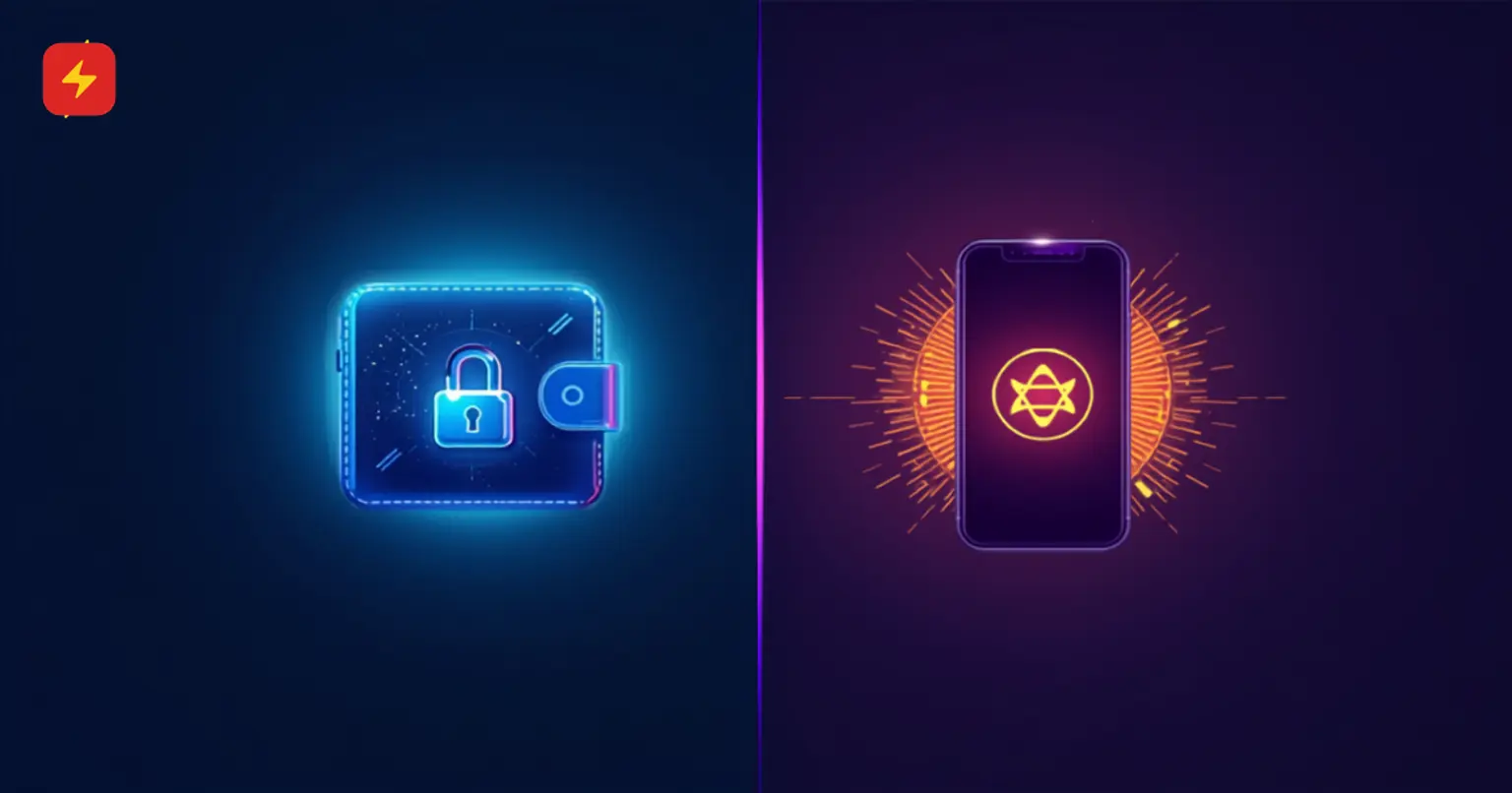
Cold or hot wallet: what actually protects your money
A cold wallet stores private keys on a device or medium completely disconnected from the internet — for example, a hardware device like a Ledger or Trezor. A hot wallet, by contrast, stays continuously connected to the network — a mobile app, a browser extension, or a web wallet on an exchange.
Why this is a fundamentally different risk level
To steal funds from a cold wallet, an attacker needs physical access to the device — a remote hack alone is useless, because the keys never leave the device or travel over the internet, even when signing a transaction. A hot wallet is different: any vulnerability in the device, the app, or the wallet itself could theoretically be exploited to steal keys remotely.
The scale of this risk isn't abstract: according to a recent CertiK report, of the $1.3 billion stolen in Web3 in the first half of 2026, the single most financially destructive attack category was wallet compromise — over $444 million across just 33 incidents.
So which wallet should you use
It's not that one type of wallet is "correct" and the other isn't — they solve different problems. A hot wallet is convenient for active trading and small everyday amounts precisely because it's always accessible. A cold wallet suits storing larger sums long-term, when access speed doesn't matter but maximum protection against remote hacks does.
What this means in practice
The sensible compromise most experienced crypto holders use is to keep only an amount they can afford to lose in a worst-case scenario in a hot wallet, while holding the bulk of their funds on a cold device that's physically unreachable from the internet.
This material is for educational purposes only and is not investment advice.

Comments (0)
No comments yet — be the first!
Related news

'All hardware wallets are garbage': on-chain sleuth ZachXBT trashes Ledger, proposes an unlikely fix

Trump joins senators at the table — the crypto bill's biggest fight is over his own $1.4 billion