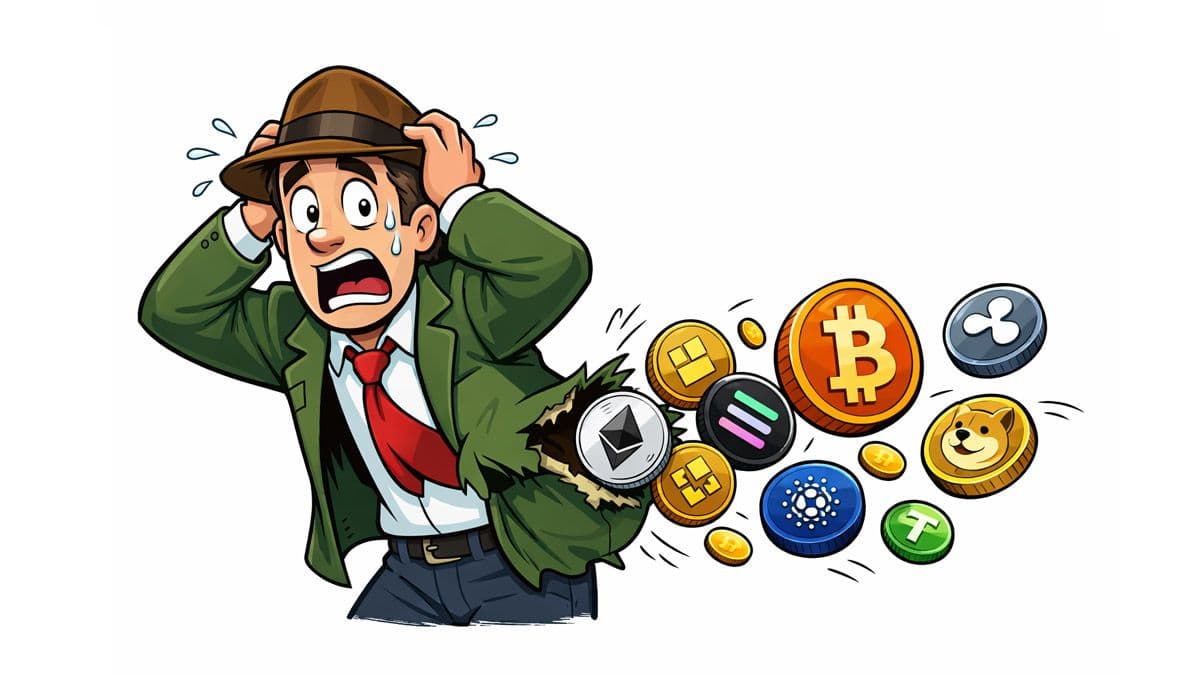
How Crypto Scams Work in 2026 — and How to Avoid Them
Stealing crypto used to mean hacking a wallet. Now scammers barely need to — they just convince someone to send the money or hand over secret data themselves. A fresh report from Chainalysis shows how well that's working: impersonation scams — where a scammer poses as exchange support, a bank, or even a government agency — jumped 1,400% in a year. AI-enabled fraud rose 450%.
What's behind those numbers? Scammers now use tools that generate convincing fake videos and voice messages, so a "support agent" on a chat or video call looks and sounds just like a real person, Google warns.
The money figures speak for themselves: crypto scams cost people $17 billion in 2025 alone, and the average loss per scam rose 253% to $2,764. That means it's not just more victims — each individual case is, on average, more expensive.
One of the most common tricks is a "passive income" pitch: victims get step-by-step instructions for setting up a mining bot or a node to earn rewards, researchers note. In reality, running that code just sends every coin in the wallet straight to the scammer.
The one thing worth remembering: no real exchange or service ever asks for your full seed phrase, even "to verify your identity." If support messages you first, it's almost always a scam, not help.
This article is for informational purposes only and does not constitute investment advice.

Author
Mike RobinsonNews feed editor
I'm constantly writing about crypto, Bitcoin, and altcoins. I cover a variety of topics related to the virtual currency market.
Comments (0)
No comments yet — be the first!
Related news

Ripple Secures Full CASP License in Luxembourg Under MiCA

Nearly 4 in 10 US Merchants Now Accept Crypto