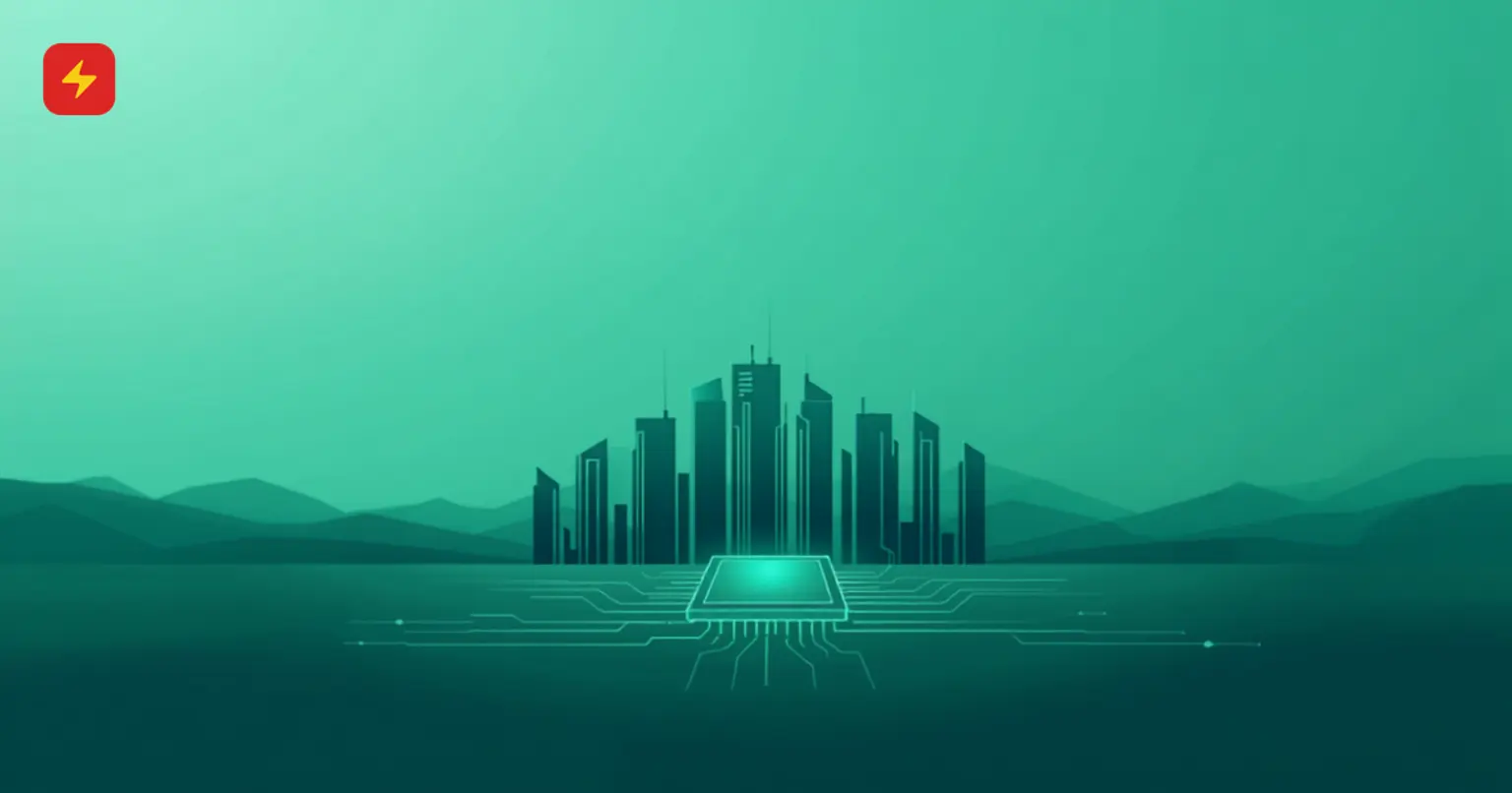
What is Silicon Valley, and why does the whole world move there
Silicon Valley isn't an official administrative name or a city — it's an informal name for a small region of California that became the world's technology capital. Here's where the term itself came from, where the valley is physically located, and why the companies that shaped the modern world happened to appear there.
Where the Name Came From
The term "Silicon Valley" first appeared in print on January 11, 1971, used by journalist Don Hoefler in his article "Silicon Valley U.S.A." for the trade newspaper Electronic News. The name came from a simple fact: semiconductors are made from silicon — the second most abundant chemical element on Earth after oxygen — and semiconductor manufacturing was concentrated in this particular California valley. As the story goes, Hoefler himself heard the phrase from marketing people during a lunch meeting, and one candidate for who first suggested it is entrepreneur Ralph Vaerst, founder of Ion Equipment Corp. The term only became widely used in the early 1980s, riding the wave of popularity of the IBM PC.
Where Silicon Valley Is Physically Located
Silicon Valley occupies the southern part of the San Francisco Bay Area and roughly corresponds to the geographic territory of the Santa Clara Valley — bounded by San Francisco Bay to the north, the Santa Cruz Mountains to the west, and the Diablo Range to the east. Its symbolic "capitals" are San Jose, Palo Alto, Mountain View, Santa Clara, and Cupertino. Before becoming a tech hub, the region was known as the "Valley of Heart's Delight" for its orchards and flowering trees, which covered the area up until the 1960s, when it was home to about 39 fruit canneries.
Why Tech Grew Up Right Here
Three overlapping factors from the late 1950s were decisive. First, in 1956, Nobel laureate William Shockley, one of the inventors of the transistor, opened his own company, Shockley Semiconductor Laboratory, here — partly simply because he'd grown up near Palo Alto and knew the region well.
Second, due to Shockley's difficult management style, eight of his top engineers, including Gordon Moore and Robert Noyce, resigned on the same day and, with funding from Sherman Fairchild, founded Fairchild Semiconductor. By the end of its third year the company's revenue had already topped $20 million, reaching $90 million a year by the mid-1960s. Even more importantly, Fairchild employees kept leaving to start their own companies — in 1980 alone, more than fifty new firms spun out of Fairchild across the valley, including Intel, founded by Moore and Noyce in 1968.
Third, Stanford University was right next door, with its graduates and faculty actively collaborating with the growing industry, and the university's Stanford Industrial Park became one of the first places in the world where academia and business developed literally side by side. On top of all this came the Cold War factor: the US government was pouring huge sums into electronics and semiconductors for defense and aerospace needs, and a large share of those contracts went to California companies.
Companies Born in Silicon Valley
- Hewlett-Packard (HP) — founded by William Hewlett and David Packard in Palo Alto; their garage is officially recognized as the "birthplace" of Silicon Valley
- Intel — founded by Gordon Moore and Robert Noyce in 1968, both Fairchild Semiconductor alumni
- Apple — founded by Steve Jobs, Steve Wozniak, and Ronald Wayne in 1976
- Google — grew out of a research project at Stanford and became one of the world's largest tech companies
Why Everyone Still Moves There
The snowball effect set off by Shockley, Fairchild, and Stanford back in the 1950s–60s keeps working the same way today: a dense concentration of engineering talent, venture capital, and experienced founders makes the region a better place to launch a new tech business than almost anywhere else in the world. That's exactly why so many major AI and crypto companies — from OpenAI to Coinbase — are headquartered here today, continuing the same tradition that started with transistors and silicon chips more than 70 years ago.
This material is for informational purposes only and is not investment advice.

Author
Maks RybalkoReviewer
For the past four to five years, I've been actively interested in the cryptocurrency market, using a variety of tools: trading bots, trading, and long-term investing. I share my personal observations in my articles.
Comments (0)
No comments yet — be the first!
Related articles
The story of Binance: from a $15M ICO to the world's biggest exchange
In eight years, Binance went from a $15M ICO to an exchange with 300 million users and $34 trillion in annual volume — surviving a $40M hack, a $4.3 billion fine, and its founder's prison sentence. Here's the full story, from launch to a presidential pardon.
Terra and Luna: how $40 billion vanished in a week
The algorithmic stablecoin UST ran on a 19.5% yield and a promise — until one week in May 2022 wiped out $40 billion and its creator, Do Kwon, was sentenced to 15 years in prison. Here's the full story of Terra, from launch to sentencing.

Five startups that defined Silicon Valley's last two years — and why crypto barely made the list
Five companies founded in Silicon Valley over the past two years are worth nearly $100 billion combined today — and not one of them is a crypto project. We break down each one: who founded it, what it's worth now, what the founders themselves say — and what happened to crypto startups from the same region in the same window.
Most read
Silicon Valley Workers Are Wearing Noise-Cancelling Masks to Dictate AI Prompts
154 views
Elon Musk Expands Access to X Money, the Payments Service Inside X
152 views
Strategy Didn't Buy Any Bitcoin Last Week — and Now Has a Plan to Sell It
45 views
Layer-2: How Blockchains Get Faster Without Touching the Base Chain
42 views
Crypto Cards That Never Take Your Keys
31 views
Crypto Market Drops 4-5% in a Day: What Volume and Traders Are Saying
31 views
DeepSeek Made Its Founder the World's Richest AI Creator — His Fortune Just Doubled to $36 Billion
28 views