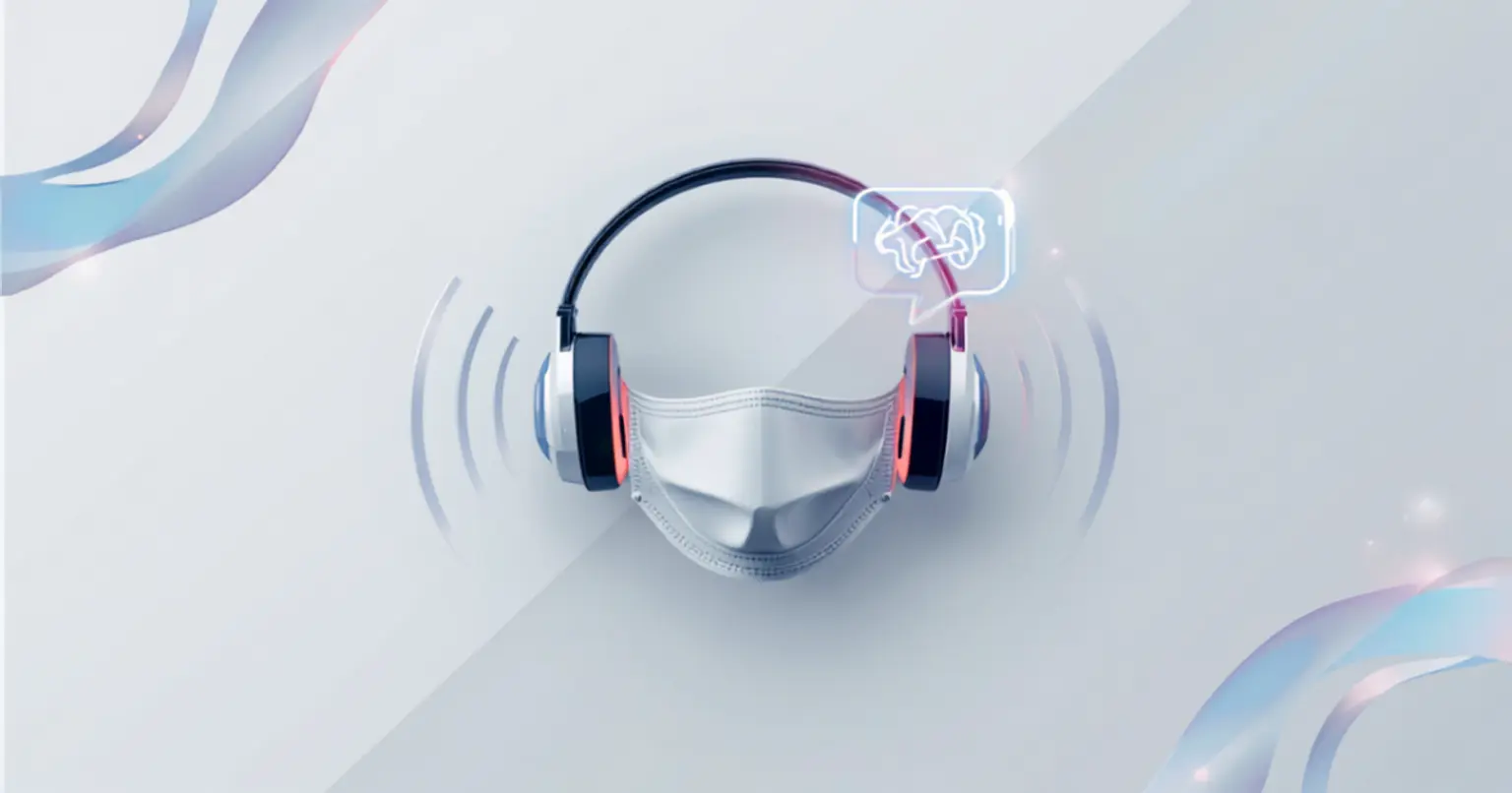
Silicon Valley Workers Are Wearing Noise-Cancelling Masks to Dictate AI Prompts
Open-plan offices at Silicon Valley tech companies increasingly sound less like a workspace and more like a call center: according to a Wall Street Journal report, developers now do much of their work by voice — dictating detailed prompts to AI agents like Claude Code, Codex and Cursor instead of typing code by hand. Some workers are solving the noise problem literally, by putting on special noise-cancelling masks.
Why Developers Started Talking Out Loud
Dictating prompts to AI agents became a common practice in 2026 precisely because modern models handle much richer context when it's spoken rather than quickly typed: a developer says the goal out loud, the constraints, the error text, and the list of files — and the AI agent ends up with a noticeably more precise task than a short typed prompt would provide.
“whispering to computers will eventually seem as normal as staring at a smartphone for hours”
— Tanay Kothari, Wispr founder, via CryptoRank
Quote source: CryptoRank
Not everyone loves the change. Gusto co-founder Edward Kim describes the office's new soundscape as sounding "more like a sales floor," and says constant dictation in an open-plan office feels "just a little awkward." AI entrepreneur Mollie Amkraut Mueller has said even her own husband grew annoyed with her whispering to her computer late at night.
Software Fought Noise First — Then Came the Masks
The first generation of fixes was purely software: apps like Willow's Quiet Mode or Wispr Flow use models trained to recognize whispered and soft speech, filtering out office noise so the text still transcribes accurately while deskmates hear nothing.
Some workers have gone a step further, switching to physical devices — the noise-cancelling masks behind the trend:
- Hushme — a Bluetooth mask worn over the mouth; it muffles the wearer's voice outward while also blocking outside noise from reaching the microphone
- Skyted — a headset paired with the Sound Bubble app, which boosts and recognizes quiet speech while showing in real time how far the wearer's voice carries, so as not to disturb people nearby
Both devices were originally built for call privacy on planes, in call centers and in open offices, but their makers now explicitly list dictating to AI agents as one of the use cases.
What This Means in Practice
The mask trend isn't just a quirky sidebar — it's a symptom of a broader shift: in 2026, voice input became part of programmers' everyday workflow specifically because of the growing quality and spread of large language models, which handle a detailed spoken task more easily than a long typed prompt. That means open-plan offices, originally designed for quiet keyboard typing, will likely either need to be redesigned in the coming years or accept that the market for voice-privacy gadgets will keep growing alongside voice AI itself.
This material is for informational purposes only and is not a recommendation to purchase any specific device.

Comments (0)
No comments yet — be the first!
Related news

Over 95% of Coinbase's Code Is Now Written With AI
China's New AI Companion Law Forces Doubao and Qwen to Kill Agent Features Today