Embeddings: how AI actually "understands" text
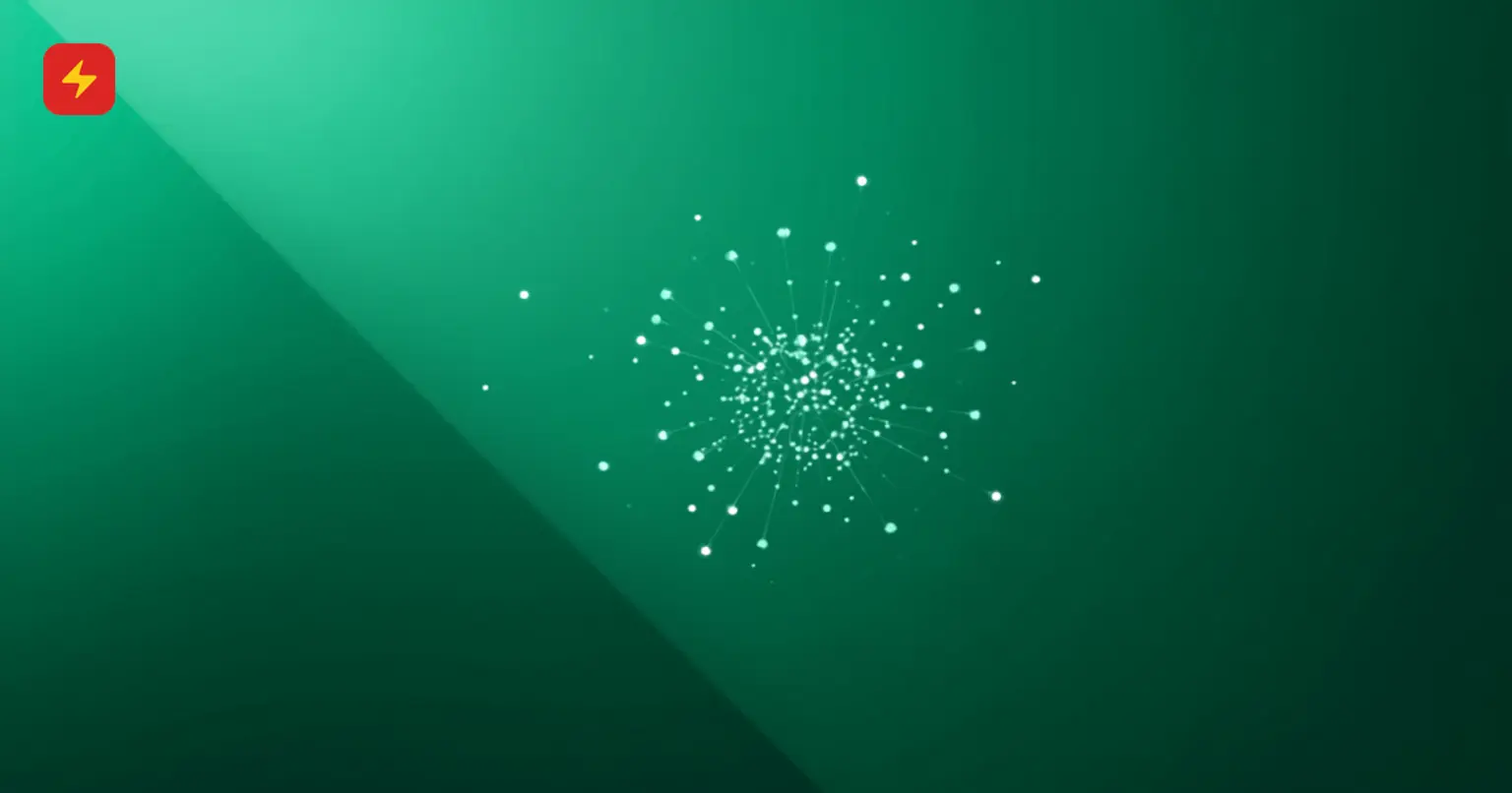
A neural network doesn't read words the way a person does — it works with numbers. An embedding is a way of turning a word, phrase, or entire document into a set of numbers (a vector) that captures the text's meaning as coordinates in a multidimensional space. Embeddings are exactly what lets modern AI "grasp" meaning, rather than just matching characters.
How It Works in Practice
A model converts text into a vector — usually made up of several hundred or thousand numbers — trained so that phrases with similar meaning end up with similar coordinates in that space. "King" and "monarch" will land close together, while "king" and "refrigerator" will be far apart, even though not a single letter matches.
Why It Matters in Practice
- Search by meaning, not keywords — a relevant document can be found even when the query and the text use different words with the same meaning
- RAG technology is built directly on embeddings: the system converts both the user's question and the knowledge base into vectors, then finds the closest matching fragments in that space to build an answer
- Recommendation systems and duplicate detection — products, articles, or images with similar meaning end up close together in vector space, making it possible to find similar content without manual tagging
What This Means in Practice
When a chatbot answers a question phrased completely differently from the source document, but still finds the right passage, that's embeddings at work, not keyword matching. Understanding this mechanism explains both the strengths of modern AI search and its typical mistakes: a model can confuse two concepts that are similar in meaning but different in fact, if their vector coordinates end up too close together.

Comments (0)
No comments yet — be the first!
Related news



Most read
Elon Musk Expands Access to X Money, the Payments Service Inside X
152 views
Silicon Valley Workers Are Wearing Noise-Cancelling Masks to Dictate AI Prompts
129 views
Strategy Didn't Buy Any Bitcoin Last Week — and Now Has a Plan to Sell It
45 views
Layer-2: How Blockchains Get Faster Without Touching the Base Chain
41 views
Crypto Cards That Never Take Your Keys
31 views
Crypto Market Drops 4-5% in a Day: What Volume and Traders Are Saying
31 views
DeepSeek Made Its Founder the World's Richest AI Creator — His Fortune Just Doubled to $36 Billion
28 views