
MiCA Is Now Live: 80% of European Crypto Firms Have No License — Here's What Happens to Their Users
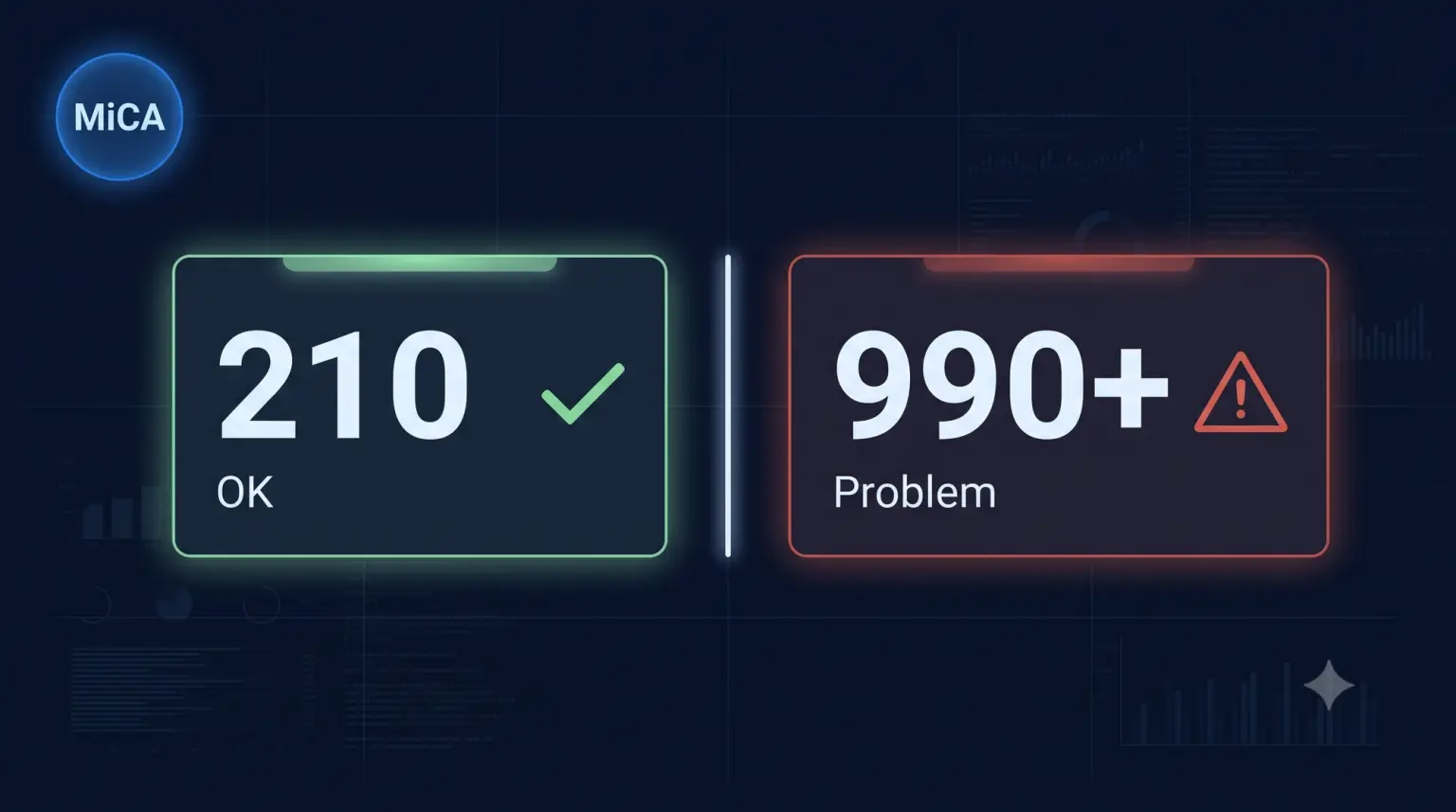
On July 1, 2026, the MiCA transitional period expired across the EU — with no extension. Of more than 1,200 registered crypto-asset service companies that operated in Europe, only around 210 — roughly 17% — have obtained a full CASP license. The remaining 80%+ are now operating illegally and must cease serving EU clients, Yahoo Finance reports.
What happens to unlicensed platforms
ESMA confirmed back in April there would be no grace extension, and said it expected unlicensed firms to have "orderly wind-down plans" in place — in plain terms, a controlled exit from EU operations. CoinDesk analysts described the outlook as a potential "wipeout" for those who didn't make the deadline. Exchanges that continue serving EU users without a license risk fines of up to €5 million or 5% of annual turnover; France has additionally made unlicensed crypto-service provision a criminal offense carrying up to two years in prison. EU banks are now required to refuse transactions with non-compliant crypto-asset services.
What it means for users
Users who still have funds on an unlicensed platform lose all MiCA protections from July 1: segregated asset storage, exchange liability, a formal complaints process, and market-manipulation safeguards. In practice, accounts move to "withdrawal-only" mode, deposits are blocked, trading is suspended, and open positions may be forcibly liquidated at unfavorable prices, OKX Europe warns. Notably, Binance — the world's largest exchange by trading volume — entered July 1 without an EU license.
"Users in Europe who keep funds on unregulated, unlicensed exchanges after 1 July 2026 lose all legal safeguards" — from OKX Europe's official MiCA guide for European users.
Who got licensed
Licensed CASP holders include Kraken, Coinbase and a number of European niche exchanges. Germany leads in approvals issued, bitcoin.com notes. A company licensed in any single EU member state automatically receives a "passport" to operate across the entire bloc — the key advantage of MiCA over the previous patchwork of national registrations.
Takeaway
MiCA converts the EU crypto market from a patchwork of national rules into a single licensing space. The price of that transition is the immediate exclusion of most existing players. For users, the practical takeaway is simple: check whether the exchange you use holds a CASP license — before you find your account blocked.
This article is for informational purposes only and is not investment or legal advice. The list of licensed platforms is updated regularly — verify current status on the ESMA website.
Comments (0)
No comments yet — be the first!
Related news



Most readTop 7

Silicon Valley Workers Are Wearing Noise-Cancelling Masks to Dictate AI Prompts
234AI

