
How a Blockchain Transfer Works: A Plain-Language Guide
Every time I explain crypto to a friend, the first question is always the same: "But where does the money actually go?" Honestly, it's a great question. With a bank, the logic is familiar: there's a server, an account, a building. But how does a transfer work on a blockchain when there's no central server and no company running it? Let me walk you through it, step by step, in plain language.
The Money Isn't "In" Your Wallet
In crypto, there are no physical coins and no safe on your hard drive. There's only a record in a ledger. Think of an enormous public spreadsheet that reads: 'Address A owns 0.5 BTC, Address B owns 1.2 BTC.' That's the blockchain — a distributed database whose copies live simultaneously on thousands of computers worldwide. Unlike fiat currency — dollars, pounds, euros — there's no central company that can freeze your funds or go offline on a Friday evening.
To change a record in this ledger, you'd have to convince the majority of thousands of machines — called nodes — that the change is legitimate. That's why blockchain is described as 'immutable': hacking it would mean simultaneously compromising thousands of independent computers around the world.
What a Wallet Actually Is
The most common misconception: thinking a crypto wallet is a purse with coins inside. It isn't. Your coins are never 'inside' the wallet. A wallet is software or a device that stores your keys — mathematical access codes to your record in the blockchain ledger.
There are two keys. Your public key is used to derive your address — the one you share with anyone who wants to send you crypto. Think of it as your bank account number, but self-generated. Your private key is the secret code you use to sign every outgoing transfer. Only you know it. There's no 'forgot password' button — lose the private key, lose access forever.
From the private key, your wallet generates a seed phrase — a set of 12–24 random words that can restore your wallet on any new device. This is the single most important thing to protect: anyone who gets hold of your seed phrase owns your funds.
What Happens When You Hit 'Send'
Here's the complete chain of events — everything that happens in the seconds after you press the button.
Step 1. You create a transaction. In your wallet you specify: how much, to whom (the recipient's public address), and a fee. On Ethereum, this fee is called gas — payment for the network's computing resources. The higher the fee, the faster your transaction gets processed.
Step 2. Sign with your private key. Your wallet signs the request with your private key — a cryptographic proof that you, the owner, are authorizing this transfer. Without a valid signature, the network will reject the transaction outright.
Step 3. The mempool — a waiting queue. The signed transaction is broadcast to the mempool — a shared waiting room for unconfirmed transactions. The network receives thousands of them at once; higher-fee transactions move to the front of the queue.
Step 4. Nodes verify. Thousands of computers worldwide independently check: Is the signature valid? Does this address have enough funds? Has this amount already been spent (protection against double-spending)?
Step 5. A block is assembled. Miners — in networks using Proof-of-Work, like Bitcoin — or validators in Proof-of-Stake networks like Ethereum — take a batch of verified transactions and pack them into a new block. Each block receives a unique hash — a mathematical fingerprint of all its contents. Change a single character and the hash changes completely.
Step 6. Block added to the chain. The new block references the hash of the previous block — forming the 'chain of blocks' (hence the name). Altering an old record is practically impossible: you'd have to recalculate every subsequent hash while outpacing the entire rest of the network. Computationally, it can't be done.
Step 7. Done. Your transaction is confirmed permanently — irreversible, without banks, without a central authority, without any possibility of reversal.
Why Does Speed Vary — Seconds vs Minutes?
Speed depends entirely on which blockchain you're using. Bitcoin produces a new block roughly every 10 minutes — that's how its architecture is designed. A transfer is generally considered 'safely confirmed' after 6 blocks, meaning about an hour. The tradeoff: it's the most battle-tested network in existence. Ethereum adds a block every ~12 seconds, as detailed on ethereum.org: a transfer finalizes in 1–2 minutes. Other chains — Solana, Avalanche — settle in fractions of a second, thanks to different consensus mechanisms and architectural trade-offs between speed and decentralization.
If your transfer is slow, you likely set a low fee and your transaction is stuck in the queue. The fix: bump the gas (most wallets have a 'speed up transaction' option).
What Is a Wallet Address?
An address is a string of 26–62 characters, mathematically derived from your public key. Sharing it is completely safe — it's the 'mailbox slot' for receiving crypto. The sender doesn't know your private key; they simply drop funds into the slot. Only you have the key to open it.
1A1zP1eP5QGefi2DMPTfTL5SLmv7Divf
That's the very first Bitcoin address — belonging to Satoshi Nakamoto, Bitcoin's creator. The chain that now secures over $1 trillion in value started with this single record in January 2009.
"What is needed is an electronic payment system based on cryptographic proof instead of trust, allowing any two willing parties to transact directly with each other without the need for a trusted third party." — Satoshi Nakamoto, Bitcoin Whitepaper, 2008
Can You Actually See a Transaction?
Yes — and this is one of crypto's most powerful features. The blockchain is fully public. Any block explorer — for example, Etherscan for the Ethereum network — lets you type in any address or transaction hash and see: how much was sent, when, what fee was paid, and how many confirmations it received.
There are no names — only addresses. This is called pseudonymity: all transactions are visible, but the person behind an address isn't revealed by default. Crypto isn't 'anonymous money' — it's closer to 'money with a pen name': everyone can see the flows, but linking them to a real identity requires extra steps.
The Bottom Line: What Did Blockchain Change?
For the first time in history, you can transfer value to anyone, anywhere in the world — without a bank, without an intermediary, without anyone's permission to freeze or reverse it. Not because 'the system trusts you,' but because mathematics is verifiable by every participant simultaneously.
My recommendation: go to Etherscan, paste any address you know, and see the ledger I just described with your own eyes. That ten-minute experiment will make blockchain feel real in a way no article ever fully can.
This article is for educational purposes only and does not constitute investment advice.

Comments (0)
No comments yet — be the first!
Related articles
What Is Crypto Mining: How Computers Create Bitcoin
Why do miners consume entire warehouses of electricity? What exactly does a computer 'mine'? Where do new bitcoins come from, and is mining profitable in 2026? A plain-language guide — from Satoshi's first laptop to industrial farms in Texas.
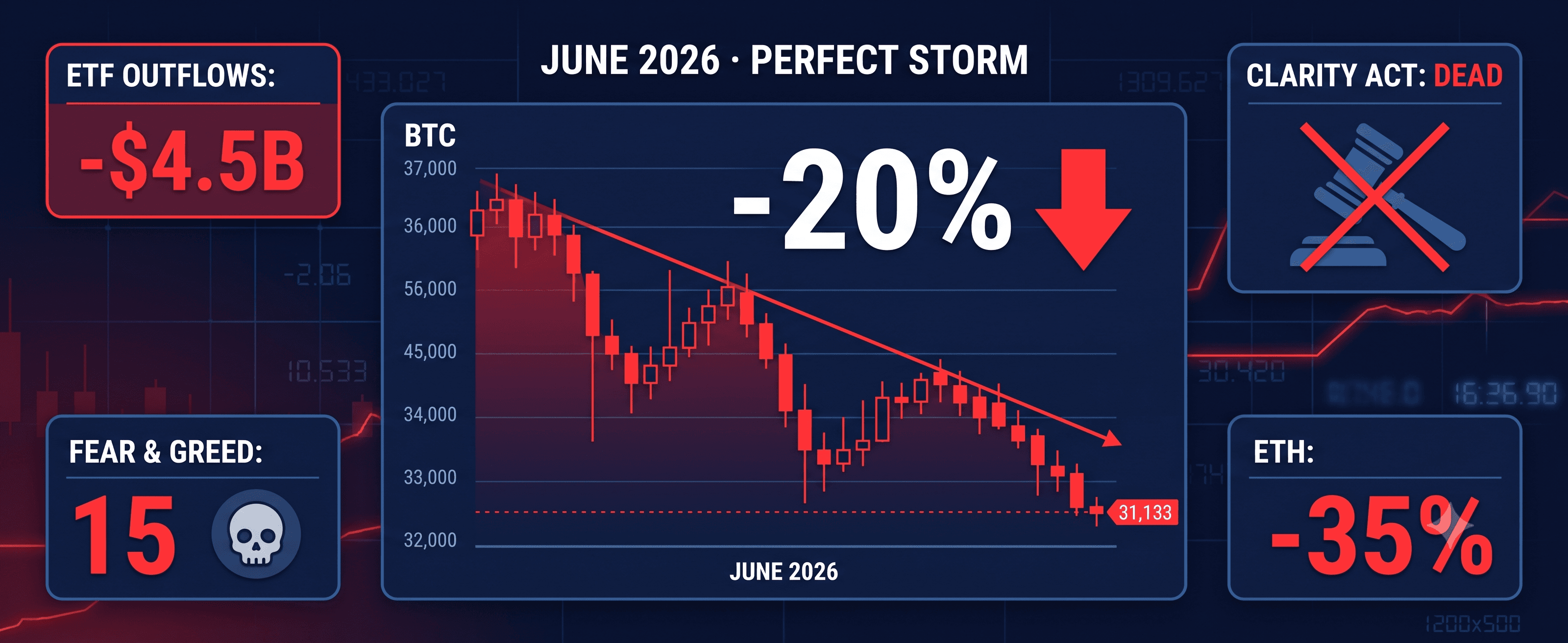
Perfect Storm: Four Reasons Why June 2026 Was Bitcoin's Worst Month Ever
Bitcoin fell 20%, Ethereum dropped 35%, $2 trillion in market cap evaporated. June 2026 was the worst month for crypto since the bull cycle began. We break down the four forces that converged simultaneously to form a perfect storm: the Fed, SpaceX's IPO, Strategy's betrayal, and a regulatory vacuum.
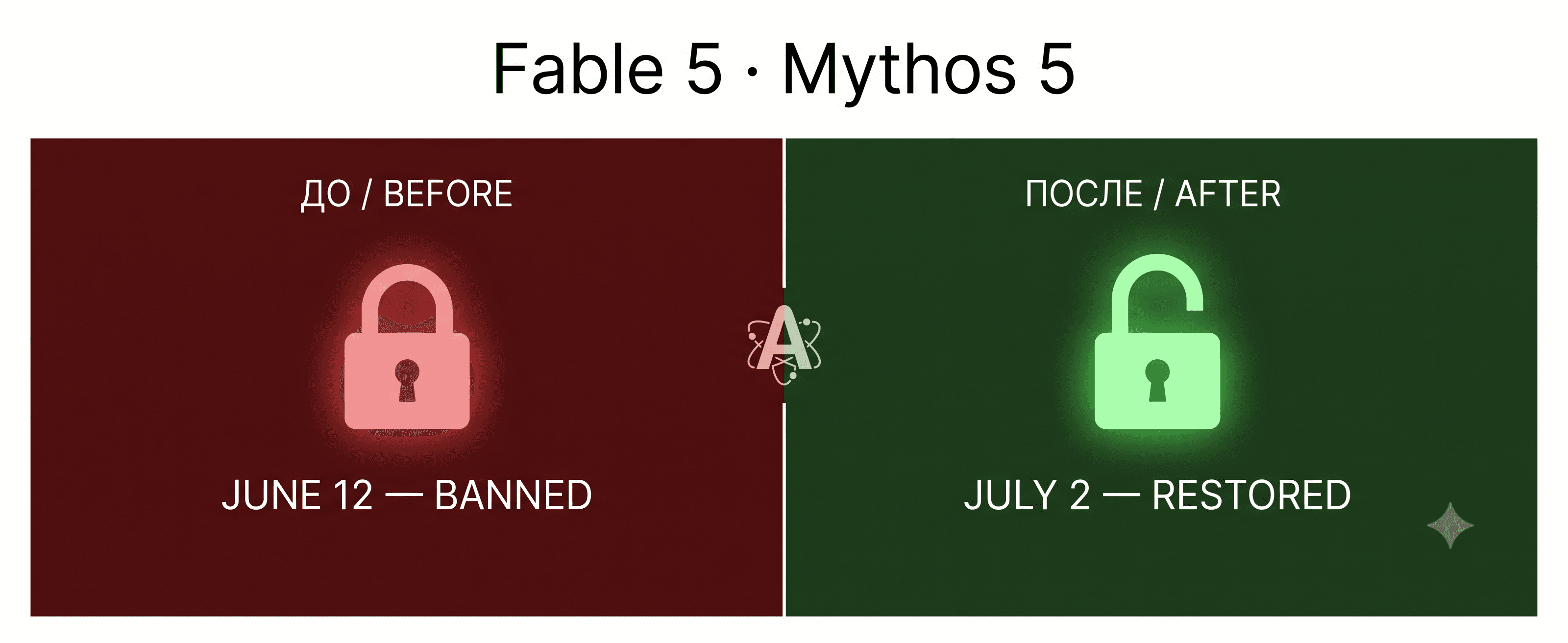
19 Days Banned: The US Has Lifted Export Controls on Anthropic's Fable 5 and Mythos 5
The US Department of Commerce has formally lifted export controls on Anthropic's Claude Fable 5 and Mythos 5 models. The restrictions lasted 19 days — from June 12, when authorities discovered a jailbreak vulnerability. From July 2, access to Fable 5 is restored globally on claude.ai, Claude Code and the API.