
What Is Crypto Mining: How Computers Create Bitcoin
The first time I heard the word 'mining,' I pictured a gold rush — except instead of a pickaxe, a computer; instead of a riverbed, the internet. That's roughly right. Here's what miners actually 'dig,' why it consumes a small country's worth of electricity, and whether it's worth investing in.
Why Does the Blockchain Need Mining?
Quick recap: a blockchain is a distributed database with no central server. No company manages it. But that means someone has to verify transactions and package them into new blocks — otherwise transfers hang in the queue forever. In networks using Proof-of-Work, that job belongs to miners.
A miner is a network participant who contributes computing power in exchange for a cryptocurrency reward. Without miners, nothing gets confirmed: your transfer would sit in a queue indefinitely. They are the engine that keeps the whole machine running.
What Is the Computer Actually Computing?
This is my favourite question, because the answer is surprising: the computer is guessing a number. Literally. To create a new block, a miner must find a special number called a nonce (number used once). When that number is combined with the block's data and fed into a mathematical function, the result — the block's hash — must start with a set number of zeroes. The more zeroes required, the harder the puzzle.
The computer tries billions — then trillions — of nonce values per second until it finds one that works. Think of a slot machine running a trillion spins per second: the winner is whoever hits the right combination first.
The network automatically adjusts the difficulty every 2,016 blocks (roughly every two weeks) to keep block production at one block per ~10 minutes, regardless of how many miners join. The full algorithm is explained on bitcoin.org.
Where Do New Bitcoins Come From?
The miner who finds the right nonce first earns the right to add their block and claims a reward — freshly created Bitcoins that appear literally from nothing at the moment the block is published. This is the only way new BTC enters circulation.
That reward is cut in half on a fixed schedule, roughly every four years:
2009 → 50 BTC / block — start: Satoshi mined on a laptop
2012 → 25 BTC / block
2016 → 12.5 BTC / block
2020 → 6.25 BTC / block
2024 → 3.125 BTC / block — current reward
≈ 2140 → 0 BTC / block — the last bitcoin will be mined
This schedule is called the halving. There will only ever be exactly 21 million BTC — hardcoded into the protocol. That programmed scarcity is a core pillar of Bitcoin's value proposition.
Who Are Miners Today?
In 2009, Satoshi Nakamoto mined the first blocks on an ordinary laptop. Since then, the industry has gone through three distinct eras.
CPU era (2009–2010). Regular processors. A home computer was enough. A motivated person could mine a block per day.
GPU era (2011–2013). Graphics cards turned out to be ~100× faster at hashing. The first multi-GPU rigs appeared.
ASIC era (2013 – present). Purpose-built chips designed exclusively for Bitcoin mining, thousands of times more efficient than GPUs. Home mining became unprofitable overnight; industrial farms in Texas, Kazakhstan, and Norway took over.
Today, the network's total hash rate — the combined computing power of all miners — exceeds 700 exahashes per second (EH/s), a number that grows every year. Live hash rate data is available on blockchain.com. These volumes are only achievable at industrial scale. Individual miners typically join pools — shared resources that split rewards proportionally to each miner's contribution.
Mining and Electricity: An Honest Conversation
Critics are right that Bitcoin mining consumes a staggering amount of energy. According to Digiconomist, the Bitcoin network uses around 130–150 TWh per year — comparable to a mid-sized country like Argentina.
Defenders point out that a large share of that energy comes from renewables — Norwegian hydro, Icelandic geothermal, stranded gas at US oil fields. Miners often consume surplus electricity that would otherwise go to waste. Ethereum chose a different path: in 2022, it switched from Proof-of-Work to Proof-of-Stake, cutting energy use by 99.9%. Bitcoin's community has so far rejected this: they argue that real-world energy expenditure is precisely what makes the network genuinely secure.
Is Mining Profitable in 2026?
Honest answer: for home mining on a standard computer or even a single ASIC — generally no. Here's why.
Competition has grown by millions of times. You're up against thousands of industrial farms running thousands of top-tier ASICs. The odds of finding a block solo are vanishingly small.
The last halving cut revenue in half. April 2024: block rewards dropped from 6.25 to 3.125 BTC. Electricity and hardware costs stayed the same.
Industrial scale is a different story. Large operations with access to cheap electricity ($0.02–0.05 per kWh from hydro or stranded gas) can still be profitable — but this is a business, not a hobby.
"Think of it like gold mining: when the price of gold rose, industrial mining companies moved in. A lone prospector with a pan simply can't compete." — a widely-used analogy in the mining industry.
Mining Is More Than Money
Here's the key insight: mining isn't a money-printing machine. It's Bitcoin's security system. The higher the network's total hash rate, the more expensive an attack becomes. To rewrite transaction history, an attacker would need to control more than 50% of the world's entire mining power — burning billions of dollars' worth of electricity in the process. Playing by the rules is far more profitable than trying to cheat.
That's the genius of Proof-of-Work: it turns physical reality — silicon chips, electricity, heat — into a mathematical security guarantee. No trust in a bank, a government, or a company is required. Only physics and math.
This article is for educational purposes only and does not constitute investment advice.

Author
Jonathan
Editor
I love writing about cryptocurrency, am interested in general trends, and try to reflect this in my materials.
Comments (0)
No comments yet — be the first!
Related articles

How a Blockchain Transfer Works: A Plain-Language Guide
Where do funds go when you send crypto? Why does a transfer arrive in seconds and can't be reversed? Where is cryptocurrency actually 'stored'? I explain the whole process step by step — no formulas, no code, just plain language.
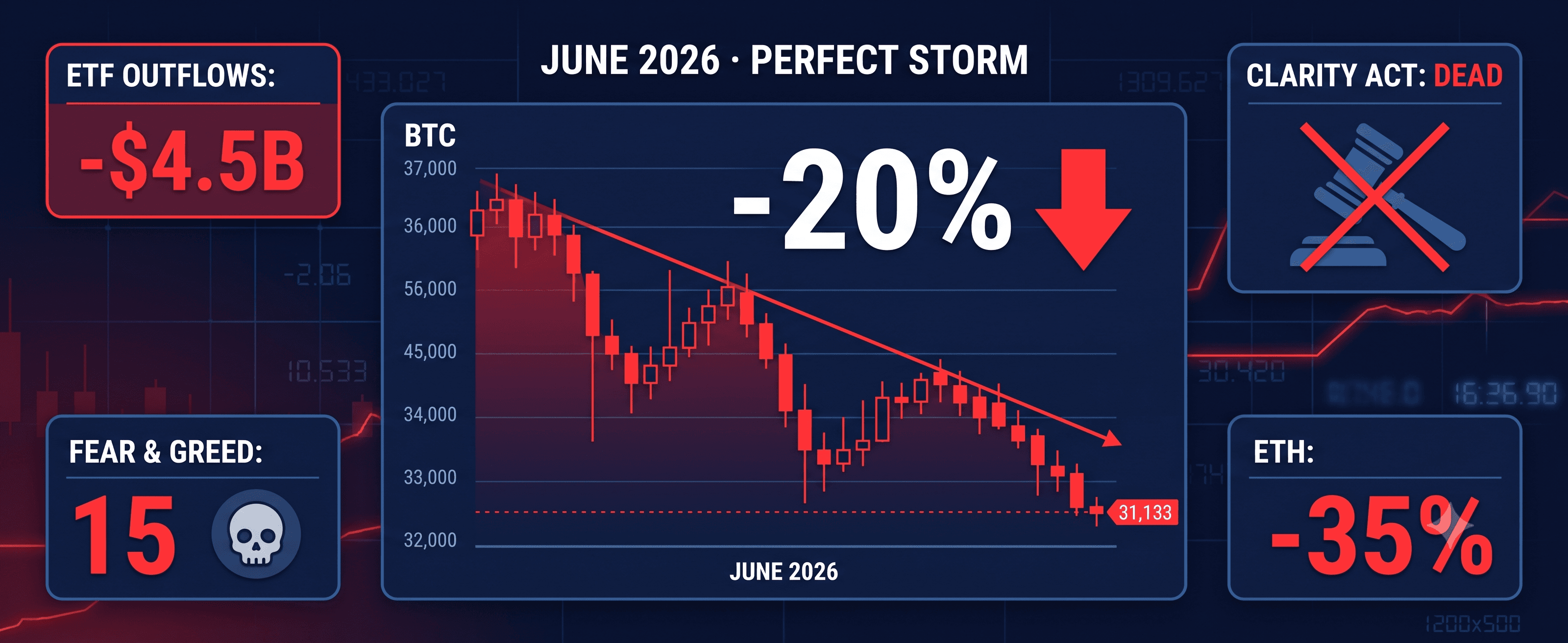
Perfect Storm: Four Reasons Why June 2026 Was Bitcoin's Worst Month Ever
Bitcoin fell 20%, Ethereum dropped 35%, $2 trillion in market cap evaporated. June 2026 was the worst month for crypto since the bull cycle began. We break down the four forces that converged simultaneously to form a perfect storm: the Fed, SpaceX's IPO, Strategy's betrayal, and a regulatory vacuum.
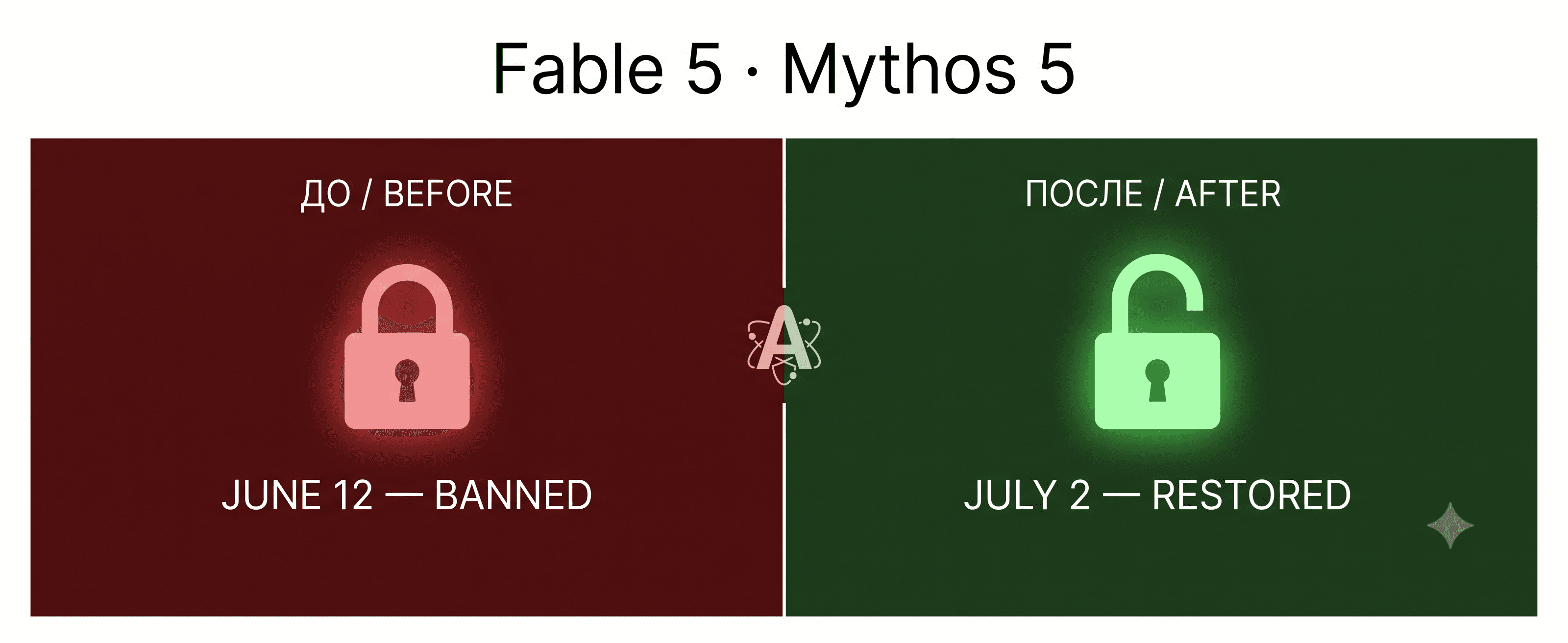
19 Days Banned: The US Has Lifted Export Controls on Anthropic's Fable 5 and Mythos 5
The US Department of Commerce has formally lifted export controls on Anthropic's Claude Fable 5 and Mythos 5 models. The restrictions lasted 19 days — from June 12, when authorities discovered a jailbreak vulnerability. From July 2, access to Fable 5 is restored globally on claude.ai, Claude Code and the API.