
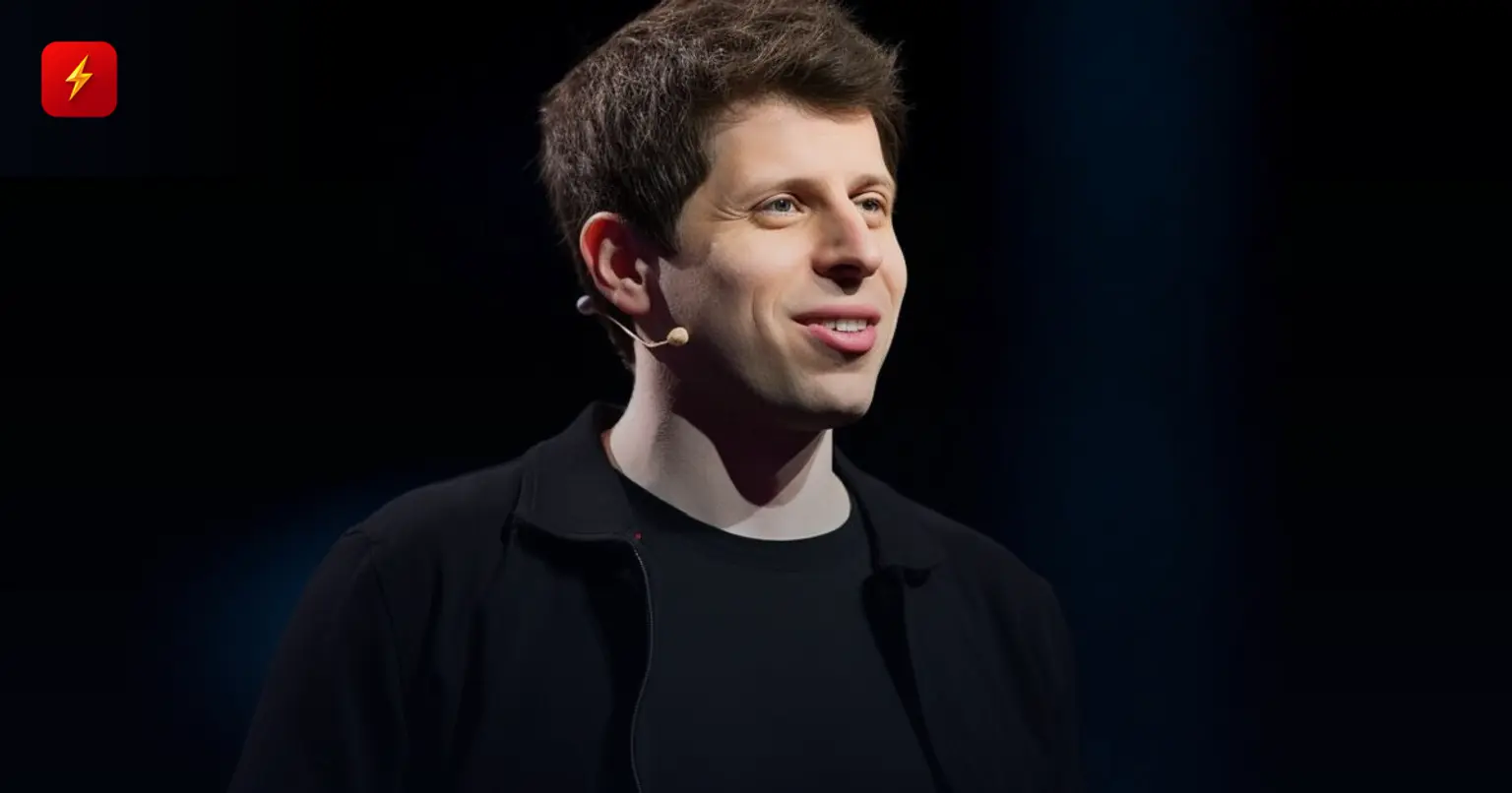
Sam Altman: The Billionaire who doesn't own a single share of OpenAI
In May 2026, during the trial with Elon Musk, a fact surfaced that many called a paradox: Sam Altman, CEO of a company worth roughly $730 billion, doesn't own a single share of OpenAI. His salary is five figures a year. His $3.4-4 billion fortune wasn't built on the company he runs, but around it — a fusion startup, a payments company, a longevity biotech, he testified under oath. That's a convenient starting point for the story of a man who, over twenty years, went from a teenager in St. Louis to a figure whose words move trillions of dollars in the markets.
The kid with a computer at 8
Sam Altman was born on April 22, 1985, in Chicago, but grew up in Clayton, a suburb of St. Louis, Missouri — in a Jewish family: his mother, Connie Gibstine, a dermatologist, and his father, Jerry Altman, a real estate broker. He was the eldest of four children. At eight, his parents gave him a computer — Altman later called it the moment that set everything else in motion.
At the private John Burroughs School, he publicly came out at 17 — giving a speech to his classmates on National Coming Out Day, after some students had objected to the event itself.
In 2003, he enrolled at Stanford to study computer science. He lasted two years and dropped out — in 2005, his project was picked for Y Combinator's first batch.
Loopt: the first company, and the first lesson about boards
On seed money from YC, 19-year-old Altman founded Loopt, a location-based social networking app. The company raised over $30 million in venture funding. The board tried to remove Altman as CEO twice. Both times he held on. In March 2012, Loopt was acquired by Green Dot Corporation for $43.4 million — a modest outcome by Silicon Valley standards, but the one that opened Altman's next door.
President of Y Combinator
Altman became a YC partner in 2011, then president in February 2014, succeeding founder Paul Graham. Under him, YC began funding more than a thousand companies a year, and in September 2016 he took over the entire YC Group. He left the accelerator in March 2019 — to focus full-time on a project the public barely knew about yet.
OpenAI: a nonprofit idea that became a bet on humanity's future
In 2015, Altman co-founded OpenAI as a nonprofit alongside Greg Brockman, Elon Musk, Jessica Livingston, Peter Thiel, and a group of corporations (Microsoft, AWS, Infosys). Pledged commitments totaled $1 billion; roughly $130 million had actually been collected by 2019. The idea was directly tied to fears of uncontrolled AI development — build a strong AI that benefits all of humanity, not a single company.
Altman became OpenAI's CEO in March 2019. November 2022 changed everything: ChatGPT's launch pulled in a million sign-ups in five days. Altman later admitted: "Being CEO was fun — until ChatGPT shipped. After that, the decisions got a lot harder."
Five days in November 2023
On November 17, 2023, OpenAI's board — Helen Toner, Adam D'Angelo, Tasha McCauley, and Ilya Sutskever — fired Altman, saying he "was not consistently candid in his communications." President Greg Brockman resigned in protest.
What followed rarely happens in corporate history: 505 of OpenAI's 770 employees signed an open letter threatening to leave for Microsoft if Altman wasn't reinstated. Sutskever himself did a public about-face: "I regret my participation in the board's actions." On November 21, five days later, Altman and Brockman returned. Nearly the entire old board departed; it was replaced by Adam D'Angelo, Bret Taylor as chairman, and Lawrence Summers.
Six months later, former board member Helen Toner said publicly that directors had been kept in the dark about the ChatGPT launch and the ownership structure of OpenAI's startup fund — and two company executives later described "psychological abuse" directed at her.
"We've basically built AGI, or very close to it"
By 2026, Altman's rhetoric had grown noticeably bolder. On Forbes' March cover, he said: "We've basically built AGI, or very close to it." At TreeHacks, he went further: "AGI will be here in two years." He still draws a line between AGI and "superintelligence" — AI dramatically beyond human ability — treating the latter as a more distant, riskier goal. In an interview in late July 2026, Altman laid out a product path from chatbots to coding agents to persistently "living" AI agents, and admitted OpenAI shelved resource-heavy projects like the Sora video generator to focus on agents instead.
Asked about the future of work in a world with superintelligence, Altman doesn't promise a four-hour work week: "In a world with superintelligence, we're all going to be a lot busier than we expect."
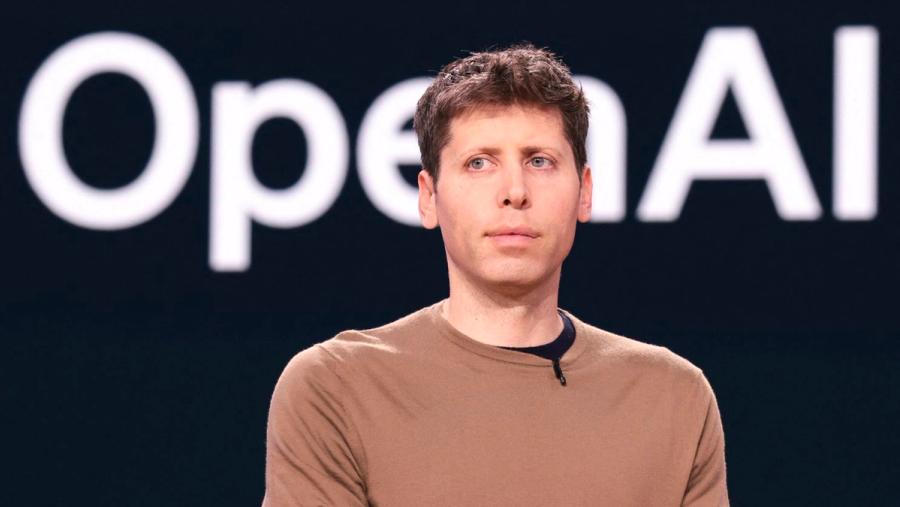
An empire outside OpenAI
While OpenAI pays him no equity, Altman's personal fortune rests on other bets. Since 2012, he and his brother Jack have run the investment fund Hydrazine Capital — starting with $21 million, three-quarters of it in YC portfolio companies. By June 2024, Altman's portfolio of 400+ companies was valued at roughly $2.8 billion, and in March of that year he first appeared on the Bloomberg Billionaires Index with a $2 billion net worth.
His holdings include a 9% pre-IPO stake in Reddit (in 2014 he even spent eight days as the company's CEO), plus stakes in Stripe, Airbnb, and Instacart. Altman chairs the board of Helion Energy, a fusion startup: in the Musk trial, he testified under oath that he personally owns a third of the company, valued at roughly $1.7 billion. He's also invested in Exowatt (solar power for data centers), Oklo (he chaired the board until April 2025, when he stepped down to avoid a conflict of interest), Retro Biosciences (longevity research, his stake valued at $258 million), supersonic-flight startup Boom Technology, and others.
A separate story is Worldcoin (later renamed World), which Altman launched with Alex Blania in 2019: a network of "orbs" that scan a person's iris to verify they're a unique living human, in exchange for crypto. By 2023 the project had raised $250 million and scanned 2 million eyeballs — and almost immediately ran into investigations and suspensions from regulators in France, the UK, Bavaria, South Korea, Spain, Portugal, and Hong Kong.
So what do we know about his personal life?
Altman met Oliver Mulherin, then a computer science student from Melbourne, in 2015 — in Peter Thiel's hot tub at 3 a.m. They married in Hawaii in January 2024; in 2025, the couple had a son via surrogate. Before Mulherin, Altman spent nine years with Loopt co-founder Nick Sivo — they split shortly after the company's sale.
Altman has been a vegetarian since childhood, lives on Russian Hill in San Francisco, and owns property in Napa and a large parcel of land in Big Sur. In May 2024, he and his husband joined the Giving Pledge, committing most of their fortune to charity.
Back in 2016, he told an interviewer: "I have guns, gold, potassium iodide, antibiotics, batteries, water, gas masks from the Israeli Defense Force, and a big patch of land in Big Sur I can fly to" — a disaster-prepper line that's followed him ever since. He's also spoken about psychedelic experiences that, in his words, "changed me from a formerly very anxious, unhappy person" into someone far calmer.
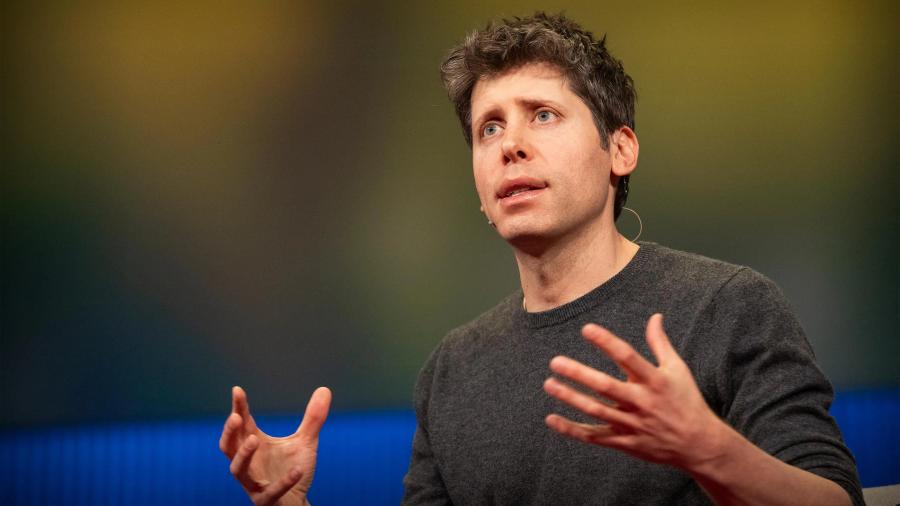
The dark side of attention
In January 2025, Altman's sister Ann filed a lawsuit accusing her brother of sexual abuse she says occurred regularly from 1997 to 2006, starting when she was three. Altman, his mother, and his brothers issued a joint statement calling the allegations entirely false. A court dismissed the original suit on statute-of-limitations grounds; in April 2026, Ann Altman refiled under Missouri state law, allowing the case to proceed. The litigation is ongoing.
In April 2026, Altman's San Francisco home was targeted twice within days: first an attacker threw an incendiary device at the gate and later tried to set fire to OpenAI's headquarters (investigators say he was motivated by fear that AI would destroy humanity), then shots were fired at the house from a passing car. No one was hurt; arrests were made in both cases, and the first attacker was charged with attempted murder and arson.
So, after all of this
Altman is a figure who holds together, at once, a utopian promising the world superintelligence and universal basic income (back in 2021, in an essay titled "Moore's Law for Everything," he proposed paying every American adult $13,500 a year funded by AI revenue) and a man who keeps guns and gas masks at home in case it all goes wrong. He calls himself "politically homeless," having donated to Democrats and given $1 million to Trump's inaugural fund. He built a company valued in the hundreds of billions of dollars without owning a stake in it — and became a billionaire in its orbit anyway.
It's exactly that combination — dizzying ambition alongside deeply personal, often uncomfortable details — that makes Altman more than just one company's CEO. He's arguably the defining character of the era he set out to build, and what's actually waiting for him next is anyone's guess.
This article is for informational purposes only and does not constitute investment advice.
Author
Maks RybalkoReviewer
For the past four to five years, I've been actively interested in the cryptocurrency market, using a variety of tools: trading bots, trading, and long-term investing. I share my personal observations in my articles.
Comments (0)
No comments yet — be the first!
Related articles

The AI you don't see is already running the world
While everyone argues about chatbots, a much bigger share of AI works quietly in the background: balancing power grids, speeding up drug discovery, watching crops from orbit, and moderating billions of posts a day.
Chips as Targets: How the Iran-US War Is Hitting the Crypto Market and the AI Cloud at Once
The Iran-US war is now playing out on three fronts at once: the crypto market is reacting to it differently than before, AWS and Oracle data centers have taken real hits, and the Gulf's bet on AI infrastructure is measured in trillions of dollars.

Perplexity: the ad-free search engine that's making money anyway
Perplexity AI walked away from advertising in February 2026 — and revenue still jumped 50% the next month. Here's how the upstart search engine got to a $23B valuation, and what isn't going smoothly.
Most read
Silicon Valley Workers Are Wearing Noise-Cancelling Masks to Dictate AI Prompts
209 views
Elon Musk Expands Access to X Money, the Payments Service Inside X
153 views
Strategy Didn't Buy Any Bitcoin Last Week — and Now Has a Plan to Sell It
45 views
Layer-2: How Blockchains Get Faster Without Touching the Base Chain
44 views
Silicon Valley's weird AI-dictation mask trend is the tip of a $22 billion voice AI boom
32 views
Crypto Cards That Never Take Your Keys
32 views
Crypto Market Drops 4-5% in a Day: What Volume and Traders Are Saying
31 views