
Open USD: Visa, Mastercard, Coinbase and 140+ Companies Launch a Stablecoin That Shares Reserve Revenue With Partners
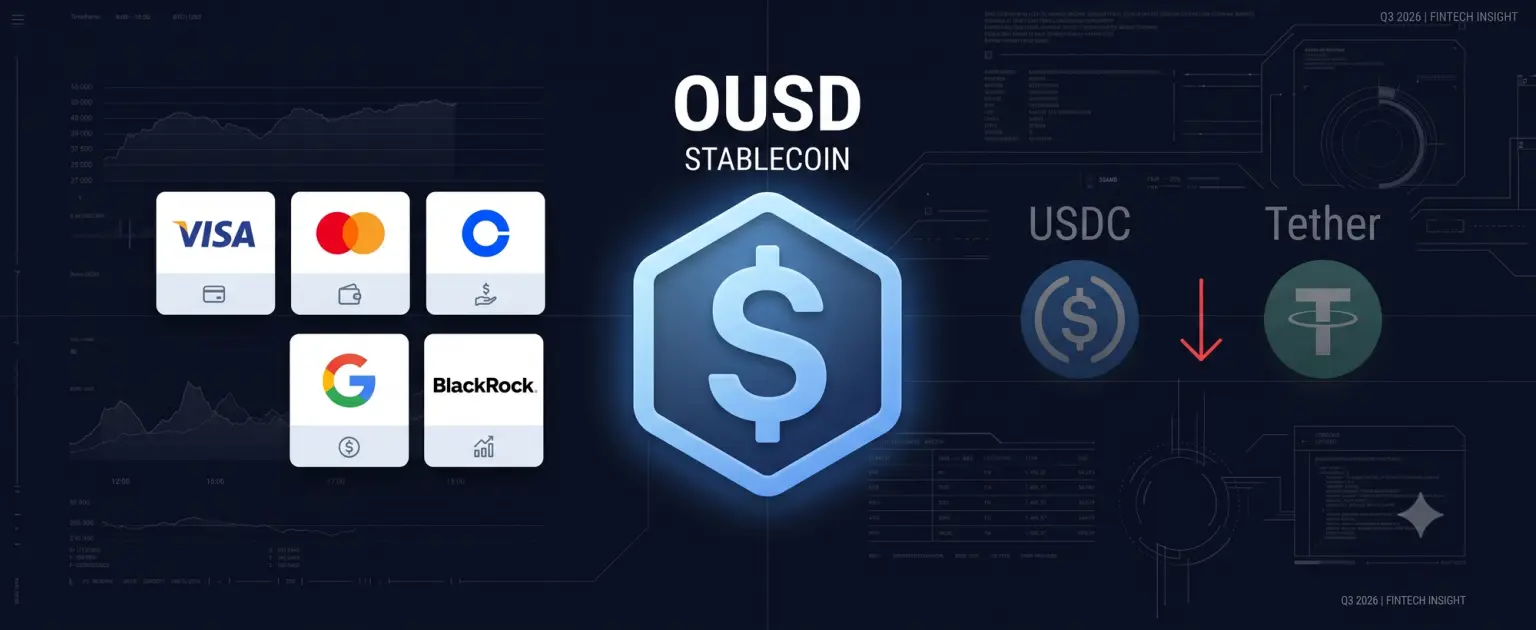
Visa, Mastercard, Stripe, Coinbase, BlackRock, Google and more than 140 other companies have joined a consortium called Open Standard to launch a new stablecoin: Open USD (OUSD). The key difference from USDT and USDC: reserve income is distributed across all network participants rather than flowing to a single issuer. Circle shares — the company behind USDC — fell more than 17% on the day of the announcement, The Block reports.
What Open USD is
OUSD is a dollar-pegged stablecoin issued by the independent Open Standard organization. The project is led by Zach Abrams — founder of Bridge, which Stripe acquired in 2024. Minting and redemption for partners are free and have no volume caps. The majority of reserve income is distributed monthly to member companies in proportion to their participation in the ecosystem.
Who's in the consortium
The partner list spans virtually the entire financial industry. Payment networks: Visa, Mastercard, American Express, Discover. Financial institutions: BlackRock, BNY, Standard Chartered, U.S. Bank, BBVA. Technology companies: Google, Shopify, IBM. Crypto firms: Coinbase, Bybit, OKX, MetaMask, Ripple, Galaxy. Stripe calls OUSD "the default stablecoin for its business"; Visa describes it as "a stablecoin for the global financial system," CryptoBriefing reports.
Why this hits Circle and Tether
Circle's USDC currently holds second place in the stablecoin market with a $76 billion market cap. A critical detail: Coinbase — one of USDC's largest distributors — has a revenue-sharing agreement with Circle that expires in August 2026. By backing Open USD, Coinbase is effectively signaling that the Circle partnership may not be renewed. For Tether, the threat is different: OUSD offers institutional transparency and governance that USDT has never had, CoinDesk notes.
When and on which blockchains
OUSD's launch is planned for the second half of 2026. The token will natively run on Solana, Stellar, Base (Coinbase's L2), Polygon and several other networks. Governance is handled through a board of directors made up of partner company representatives — a fundamentally decentralized model compared to Tether and Circle.
Takeaway
Open USD is not just another stablecoin. It is an attempt to restructure the market's business model itself: where reserve profits once went exclusively to the issuer, they will now be shared across the entire network. If the consortium reaches critical mass, Tether and Circle face a stark choice — change their model or lose distribution.
Comments (0)
No comments yet — be the first!
Related news



Most readTop 7

Silicon Valley Workers Are Wearing Noise-Cancelling Masks to Dictate AI Prompts
234AI

