

Bitcoin Holds $62K as Seoul's AI Stock Meltdown Rattles Global Markets
Bitcoin is trading near $62,600 on June 25 — up a modest 0.6% on the day, but still just a few percentage points above the lowest level it has touched since October 2024. The trigger this time isn't a crypto-native headline: it's a 10% crash in South Korea's Kospi index that tore through global AI stocks and dragged risk appetite down with it, crypto included.
A circuit breaker in Seoul, felt on Wall Street
On June 23, the Kospi fell 10% in a single session, tripping a 20-minute circuit breaker. Samsung Electronics dropped about 12.3%, SK Hynix about 12.5%, and foreign investors pulled roughly 5.79 trillion won (about $3.8 billion) out of Korean equities in one day. Two catalysts collided: MSCI once again declined to add South Korea to its Developed Markets watchlist, removing the passive-inflow trigger investors had been pricing in, and regulators flagged concerns over newly launched leveraged single-stock ETFs tracking Samsung and SK Hynix — products barely a month old.
How the panic reached Bitcoin
The selloff didn't stay in Asia. The Nasdaq fell 2.21%, the S&P 500 lost 1.44%, the Philadelphia Semiconductor Index dropped roughly 8%, and Japan's Nikkei slid 3.55%. For crypto, the mechanism was identical to what hit chip stocks: capital that had been chasing AI infrastructure, fresh IPOs and prediction markets stopped looking like “excess liquidity” overnight and started exiting risk assets altogether — Bitcoin included.
Micron Technology's earnings report on June 24, widely treated as a report card for the entire AI-memory chip complex, came in ahead of expectations — and Bitcoin clawed back part of its losses on the news. Even so, the broader trend hasn't changed: Bitcoin is now roughly eight months into a bear market.
ETF outflows haven't stopped
The price bounce masks a weaker structural picture. US spot Bitcoin ETFs have now posted six straight weeks of net outflows, totaling around $6 billion — $2.4 billion of that in June alone. The Crypto Fear & Greed Index is stuck at 24, deep in “Extreme Fear” territory.
Who's still buying
Institutional outflows through ETFs don't tell the whole story. Strategy, Michael Saylor's company, added 520 BTC, while Strive bought 759 BTC at an average price of $65,850 — above the current spot price. It's a classic “strong hands buy into someone else's panic” pattern, even though Strategy itself rattled some holders earlier this cycle by trimming part of its position for the first time in years.
Thursday is the next checkpoint
According to incrypted.com's trading desk, Bitcoin is range-bound between $62,000 and $65,000 ahead of Thursday's key US macro data — core PCE inflation, Q1 GDP, and initial jobless claims. The dollar index (DXY) has already climbed back above 100, adding further pressure on risk assets. Traders are being advised to avoid large positions in high-beta pairs until the data clarifies market structure.
Bitcoin Core developer Jameson Lopp summed up the dynamic earlier this month: “I suspect the root cause is the bear market, combined with TradFi markets experiencing an AI boom.” This week's events fit that thesis almost exactly — as capital keeps chasing AI infrastructure and semiconductors, there simply isn't enough fresh liquidity left to push Bitcoin sustainably higher, even when isolated good news, like Micron's earnings, sparks a bounce.
Takeaway
Today's price action is a clean illustration of where Bitcoin sits in 2026: not in a vacuum, but competing for liquidity with AI stocks and the semiconductor complex as part of one global risk trade. The Micron-driven bounce shows the market can still snap back hard on good news even in a phase of extreme fear — but a sustained reversal looks unlikely while ETF outflows and the tech selloff continue side by side. Thursday's PCE and GDP releases may end up mattering more for Bitcoin's next move than anything happening inside crypto this week.
This article is for informational purposes only and is not investment advice. Cryptocurrency markets are highly volatile — do your own research before making any financial decisions.
Comments (0)
No comments yet — be the first!
Related articles
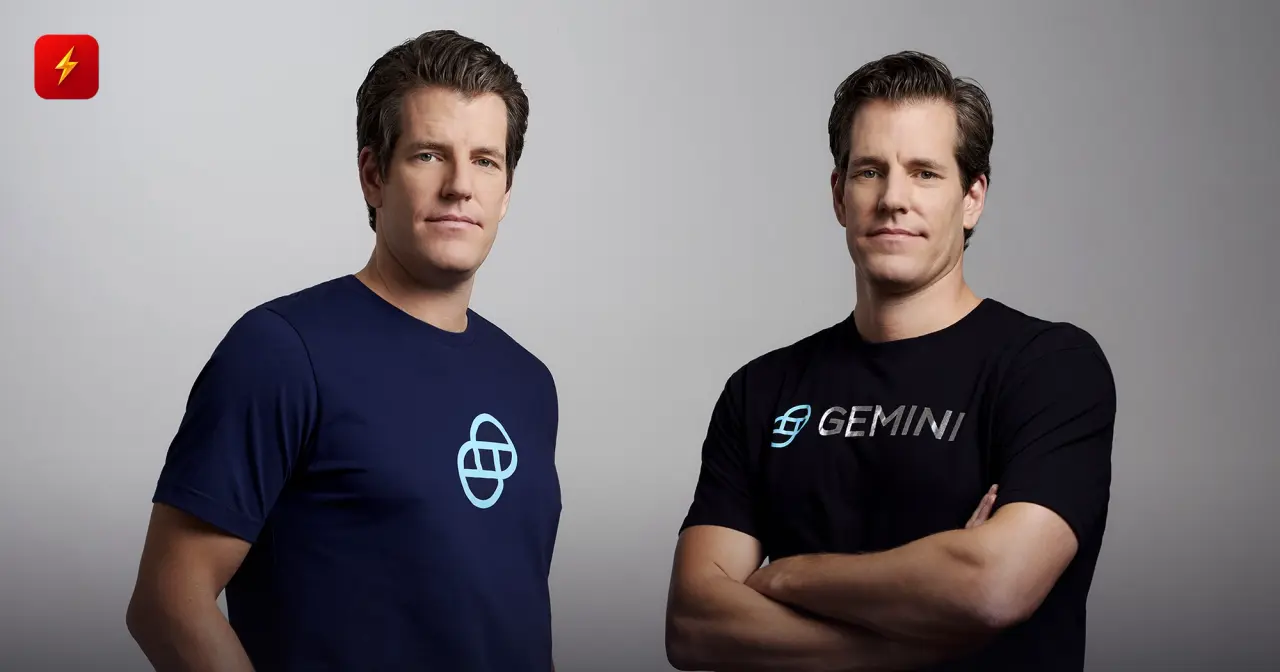
The Winklevoss Twins: Rowers, Zuckerberg's Rivals, Bitcoin Billionaires
Cameron and Tyler Winklevoss ended up at the center of two of the last twenty years' biggest tech stories — the birth of Facebook and the birth of the bitcoin industry. We trace their path from suing Mark Zuckerberg to taking their own exchange, Gemini, public on Nasdaq.
Why 11 Crypto Card issuers vanished and the math that decides who's next
At least 11 crypto card issuers have effectively exited the market over the past year. Generis research maps three systemic failure modes — and explains why a card-only model doesn't add up without a wider ecosystem around it.

Mark Zuckerberg: the Harvard student who now spends $140 billion a year on AI
How a Harvard student built the largest social network in history, survived the Winklevoss lawsuit and a failed crypto project called Libra, and turned Meta into one of Silicon Valley's biggest AI bets — with a $140 billion-a-year AI budget.
Most readTop 7

Silicon Valley Workers Are Wearing Noise-Cancelling Masks to Dictate AI Prompts
227AI

