
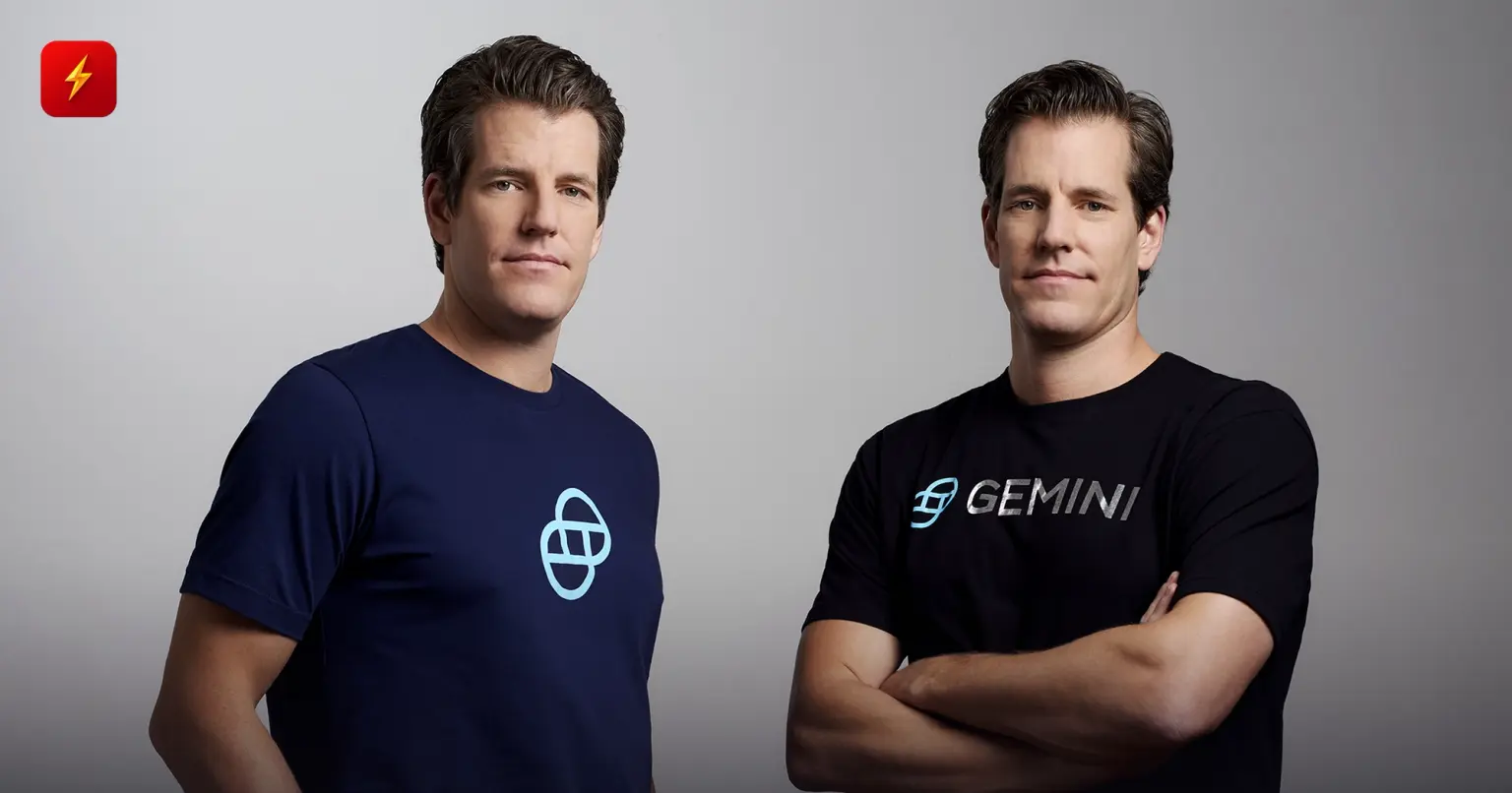
The Winklevoss Twins: Rowers, Zuckerberg's Rivals, Bitcoin Billionaires
Few people's lives are as tightly woven into the two biggest tech stories of the last twenty years — the birth of Facebook and the birth of the bitcoin industry — as Cameron and Tyler Winklevoss. First, as the young men whose idea, in their own telling, was taken by a classmate named Mark Zuckerberg. Later, as some of the first major private investors in bitcoin, who turned a $65 million Facebook settlement into a crypto fortune and their own Nasdaq-listed exchange.
To some, they'll always be the tall rowing twins from The Social Network, the film most of us have seen, outmaneuvered by a quicker-witted classmate named Mark. To others, they're calculating entrepreneurs who took what was, in essence, a lost fight over a social-network idea and turned it — with enough money and stubbornness — into a decade-later spot among the first bitcoin billionaires. Both versions are true at once, and that's what makes their story more interesting than most other crypto biographies.
Before Facebook: Harvard, Rowing, and HarvardConnection
Cameron and Tyler were born on August 21, 1981, in Southampton, New York, to Howard Winklevoss — an adjunct professor of actuarial science at Wharton — and his wife Carol. The brothers are identical, mirror-image twins: Cameron is left-handed, Tyler right-handed. They grew up in Greenwich, Connecticut, both studied classical piano for twelve years, and both excelled at Latin. In 2002, the family was struck by tragedy: their sister Amanda died of cardiac arrest induced by a drug overdose at age 21.
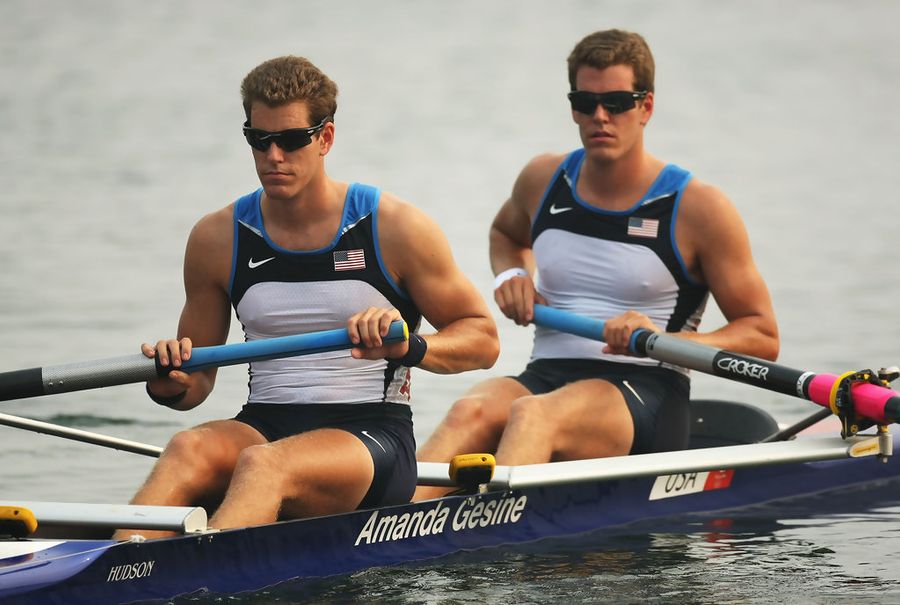
The twins started rowing at 15 and took it to a professional level: gold and silver at the 2007 Pan American Games in Rio, bronze at the 2009 World Cup in Lucerne, and in 2008, a trip to the Beijing Olympics in the coxless pair, where they finished sixth.
Alongside rowing, the brothers studied at Harvard — both earned bachelor's degrees in economics in 2004, and both later completed MBAs at Oxford's Saïd Business School in 2010.
There's a bit of dark irony in this biography: their father spent his career teaching at Wharton, one of the world's strongest business schools — and years later his sons would end up at the center of one of the era's loudest business conflicts, playing out not at Wharton, but at neighboring Harvard.
It was at Harvard, in December 2001, that they and classmate Divya Narendra conceived HarvardConnection — a social network whose access would be tied to a specific university, letting users make connections, exchange contacts, and coordinate student life within a closed circle of classmates. To build it, they hired a programmer: a sophomore named Mark Zuckerberg.
The Legal Saga With Mark Zuckerberg
Zuckerberg never finished the promised work on HarvardConnection — instead, in February 2004, he launched his own project, TheFacebook, which quickly turned into Facebook. The brothers, who by then had renamed their project ConnectU, sued Zuckerberg, accusing him of breaching an oral agreement and using their work and source code.
The litigation dragged on for years, but in February 2008 the parties reached a settlement valued at roughly $65 million — $20 million in cash and $45 million in shares of the still-private Facebook.
That wasn't the end of it. In May 2010, ConnectU accused Facebook of securities fraud, claiming the shares they'd received were actually worth about $11 million at the time of the deal, not $45 million — meaning, they argued, they'd been misled about the company's valuation. The irony: by August of that same year, Facebook shares on the secondary market were trading at a price that valued the brothers' stake at nearly $120 million — meaning the deal had turned out hugely in their favor even without any revaluation. The 9th U.S. Circuit Court of Appeals ultimately sided with Facebook, ruling the twins understood exactly what they were agreeing to when they signed. In June 2011, the Winklevoss twins abandoned any further appeal to the U.S. Supreme Court.
Their conflict with Zuckerberg was made famous worldwide by The Social Network (2010), directed by David Fincher from a script by Aaron Sorkin, in which both brothers (technically played by one actor, Armie Hammer, via a body double and digital effects) come across as ambitious and slightly naive. It was after the film that the twins picked up the ironic nickname "Winklevii" — a version of events the Winklevosses have repeatedly called inaccurate and overly dramatized, though they've never denied the basic outline: their idea really was taken, and the programmer they hired really did build his own company on top of it.
From a Settlement to a Bitcoin Bet
After getting the Facebook money, the brothers didn't rush straight into crypto — first came other ventures, including Guest of a Guest, a New York social-scene blog co-founded with Rachelle Hruska (Cameron sold his stake in 2012), and in 2012, the venture fund Winklevoss Capital Management.
The turning point came in April 2013: the brothers announced they'd put $11 million into bitcoin — by their own math, about 1% of the coin's entire supply at the time. The purchase came the day after bitcoin hit its then-record high of $266 and immediately crashed to $120 — meaning the twins bought straight into one of the first genuinely wild volatile weeks in the asset's history.
Even then, they tried to institutionalize their bet: in July 2013 they filed with the SEC to create the Winklevoss Bitcoin Trust — effectively the first-ever bitcoin exchange-traded fund (ETF) proposal. The regulator rejected the application in March 2017, citing fraud risk and the lack of regulation across major bitcoin markets, and rejected a second attempt, filed through the BATS BZX exchange, again in July 2018. It would take more than five years before spot bitcoin ETFs finally arrived on the US market — from other issuers entirely.
Gemini: An Exchange, a Crisis, and Going Public
Unable to push the ETF idea through, the brothers took a different path — founding their own crypto exchange, Gemini, in 2014 and launching it for real trading in October 2015 under the oversight of New York's Department of Financial Services. Today, according to Forbes, the exchange handles roughly $30 million in trades a day.
In 2019, Gemini acquired the NFT platform Nifty Gateway, betting on digital art and collectibles — though in February 2026 the company announced it was shutting down that business line to focus on building Gemini into a broader financial super-app.
The exchange's toughest test came from the collapse of its lending partner, Genesis, part of Digital Currency Group. When Genesis halted withdrawals in November 2022 amid the FTX collapse, roughly $900 million in assets belonging to about 340,000 Gemini Earn users were frozen. The resolution took more than a year: by February 2024, every Gemini Earn user had gotten back 100% of their digital assets — and thanks to the market's rise over that period, the actual payout exceeded the originally frozen amount by roughly $700 million. Separately, Gemini paid the New York Attorney General about $50 million over claims from more than 230,000 investors, while Genesis itself settled SEC charges with a $21 million penalty.
Having survived that crisis, Gemini didn't just endure — it went public. On September 12, 2025, the company (officially Gemini Space Station) held its IPO on Nasdaq under the ticker GEMI. Shares priced at $28, valuing the company at about $3.3 billion, and jumped more than 30% above the offer price on the first day of trading before closing roughly 14% above the IPO price. It happened just as other major crypto companies like Kraken, Ledger and Consensys were putting their own IPO plans on pause instead. On the day of the listing, the brothers spoke to CNBC, with Tyler calling bitcoin "gold 2.0" and saying mass adoption was still in its "first inning."
We've believed our whole lives that bitcoin is gold 2.0. Mass adoption is just getting started — we're still in the first inning.
Together, the brothers projected that bitcoin could reach $1 million a coin within the next decade.
Who They've Become Beyond Crypto
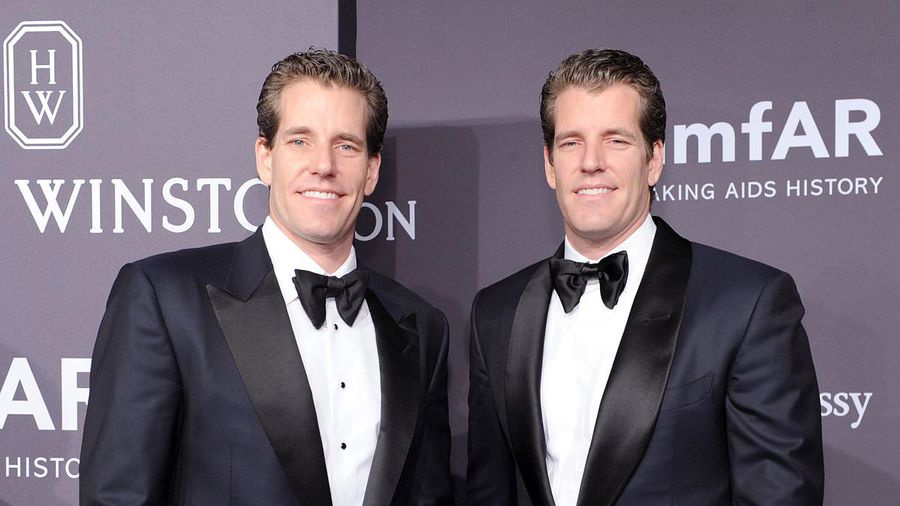
Beyond their crypto empire, the brothers have diversified in a rather unexpected direction: in February 2025, they invested $4.5 million in Real Bedford FC, an eighth-tier English football club, taking a 45% stake and becoming partners with the club's existing owner — crypto podcaster Peter McCormack, who bought the club back in 2021 and has openly stated his goal of taking the team all the way to the Premier League.
The brothers are also active in US politics: in the first half of 2025, each donated roughly $500,000 to Donald Trump's super PAC, MAGA Inc., and by October that year were listed among the donors funding construction of the White House State Ballroom.
The brothers keep their personal life outside business pointedly private — unlike the Facebook saga or the details of their crypto deals, reliable information about the Winklevosses' marital status and children is scarce, and we're deliberately not going to repeat the unverified rumors circulating on less-than-reliable corners of the internet.
What They're Worth Today
According to Forbes as of August 7, 2026, each brother's net worth is estimated at $2.3 billion — putting their combined fortune, by Forbes' conservative methodology, above $4.6 billion. That wealth is almost entirely crypto-native: beyond their stake in Gemini itself, the brothers are credited with a combined reserve of roughly 70,000 bitcoins (about 35,000 each), built up from that original 2013 bet. Other, less conservative estimates that account for a broader asset portfolio have put the brothers' combined net worth above $10 billion at various points in the 2020s — the figure swings heavily depending on bitcoin's current price and the methodology used. Even by the strictest estimate, the original $11 million invested in 2013 has grown by hundreds of times over thirteen years — and that's before counting the value of Gemini itself, which they built from scratch into a public company on Nasdaq.
A quick timeline of one biography's key dates:
- August 21, 1981 — the twins are born in Southampton, New York
- December 2001 — the HarvardConnection idea, Mark Zuckerberg hired
- February 2004 — Zuckerberg launches TheFacebook
- August 2008 — Beijing Olympics, rowing, 6th place
- February 2008 — $65M settlement with Facebook
- April 2013 — $11M bitcoin purchase
- March 2017 / July 2018 — SEC rejects the bitcoin ETF bid twice
- October 2015 — Gemini exchange launches
- November 2022 – February 2024 — Gemini Earn crisis and resolution
- February 2025 — Real Bedford FC investment
- September 12, 2025 — Gemini's Nasdaq IPO
From a rival programmer who took their idea to becoming "the first bitcoin billionaires" and owners of a public Nasdaq company — the Winklevoss twins' path over a little more than twenty years has brushed against nearly every major storyline of 21st-century Silicon Valley: social networks, cryptocurrency, NFTs, and, eventually, an IPO. Either way, their story is a good reminder that in this industry, a rematch sometimes matters more than winning the first round.
Nothing here should be taken as financial advice — just information to consider.

Author
Maks RybalkoReviewer
For the past four to five years, I've been actively interested in the cryptocurrency market, using a variety of tools: trading bots, trading, and long-term investing. I share my personal observations in my articles.
Comments (0)
No comments yet — be the first!
Related articles
Why 11 Crypto Card issuers vanished and the math that decides who's next
At least 11 crypto card issuers have effectively exited the market over the past year. Generis research maps three systemic failure modes — and explains why a card-only model doesn't add up without a wider ecosystem around it.
Mark Zuckerberg: the Harvard student who now spends $140 billion a year on AI
How a Harvard student built the largest social network in history, survived the Winklevoss lawsuit and a failed crypto project called Libra, and turned Meta into one of Silicon Valley's biggest AI bets — with a $140 billion-a-year AI budget.
Jensen Huang: How a Kid From a Denny's Diner Built a Giant
For thirty years, Jensen Huang told employees Nvidia was "thirty days from going out of business" — now he runs a $4.7 trillion company. The founder's story, from a Denny's diner to his first-ever X post and $1 trillion in Blackwell and Rubin chip orders.
Most readTop 7

Silicon Valley Workers Are Wearing Noise-Cancelling Masks to Dictate AI Prompts
226AI

