
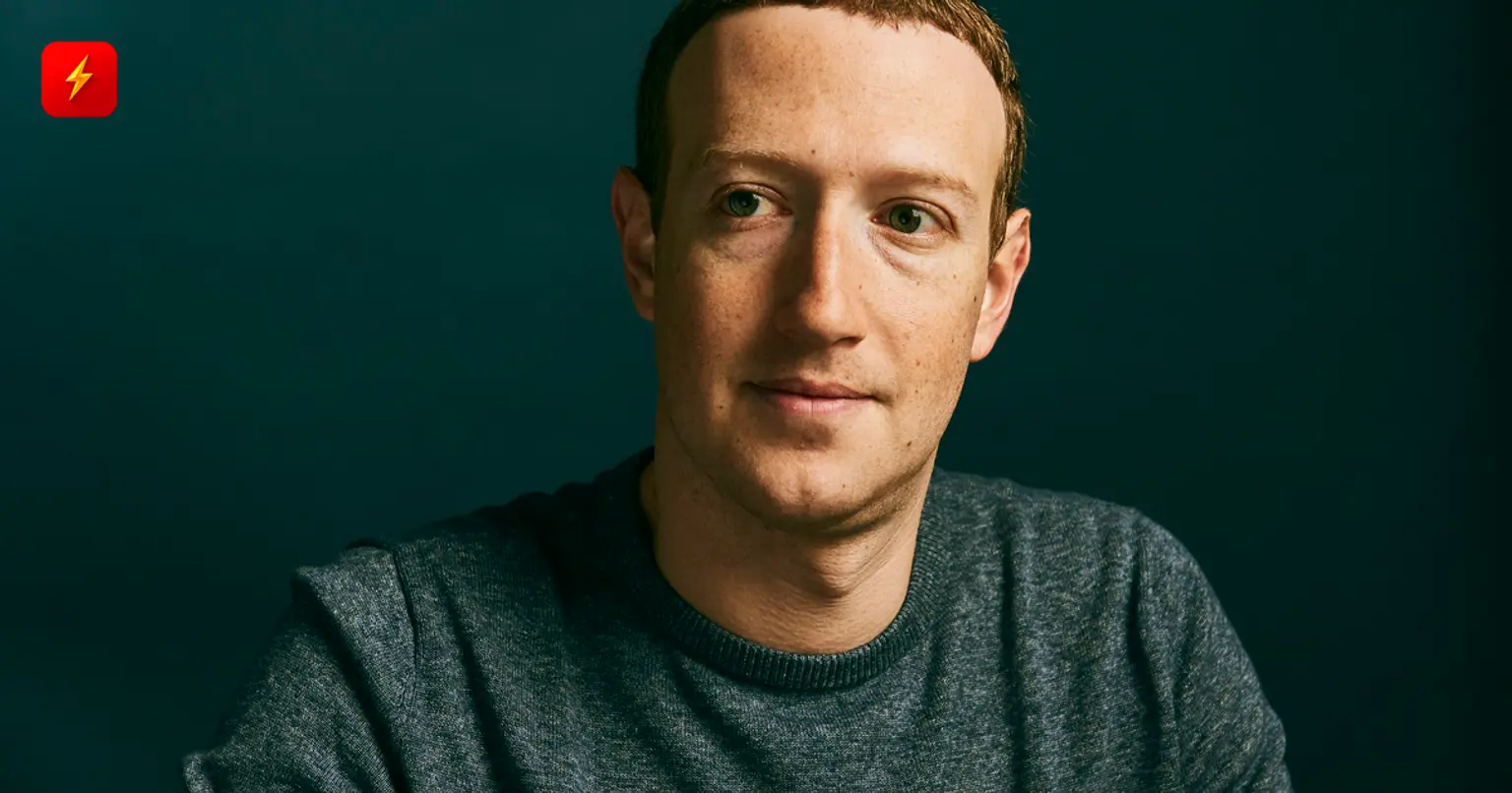
Mark Zuckerberg: the Harvard student who now spends $140 billion a year on AI
Some names become shorthand for an entire era of the internet. Mark Zuckerberg is one of them: at 19, he built a website for his classmates, and two decades later he runs a company whose apps — Facebook, Instagram, WhatsApp — carry billions of people through their day, and which now pours into AI infrastructure sums comparable to a small country's budget. This is the story of how both things happened at once: a network that connected half the planet, and a company still dogged by questions about what that connection cost.
The history of Facebook
On February 4, 2004, Harvard sophomore Mark Zuckerberg launched TheFacebook from his dorm room — a closed, online version of the paper "facebooks" Harvard handed out so students could get to know each other. The idea was simple: a profile, a photo, a friends list — mundane by today's standards, novel back then. Within 24 hours, more than a thousand students had signed up, and that was only the start.
Four other people were there from the beginning: Eduardo Saverin, Dustin Moskovitz, Chris Hughes, and Andrew McCollum. By March 2004 the project had spread to Columbia, Stanford, and Yale, and by year's end it covered most colleges in the US and Canada — over a million users in under twelve months. In 2005 the company bought the domain facebook.com for $200,000 and dropped the "The" — that's how plain Facebook was born.
Growth came with the company's first major fight: brothers Cameron and Tyler Winklevoss, together with Divya Narendra, claimed Zuckerberg had taken the idea and code from their own project, ConnectU, which he'd worked on before TheFacebook launched. The dispute dragged on for years and ended in a 2008 settlement worth $65 million — $20 million in cash and $45 million in Facebook stock — a deal an appeals court later upheld.
Facebook went public in May 2012, one of the loudest IPOs in tech history. A string of acquisitions followed that reshaped the company itself: Instagram for $1 billion in 2012, the messaging app WhatsApp for $19 billion in 2014, and VR startup Oculus for $2 billion, also in 2014. In October 2021 the company renamed itself Meta, signaling a pivot toward the metaverse — and in the past few years, another pivot, this time toward artificial intelligence.
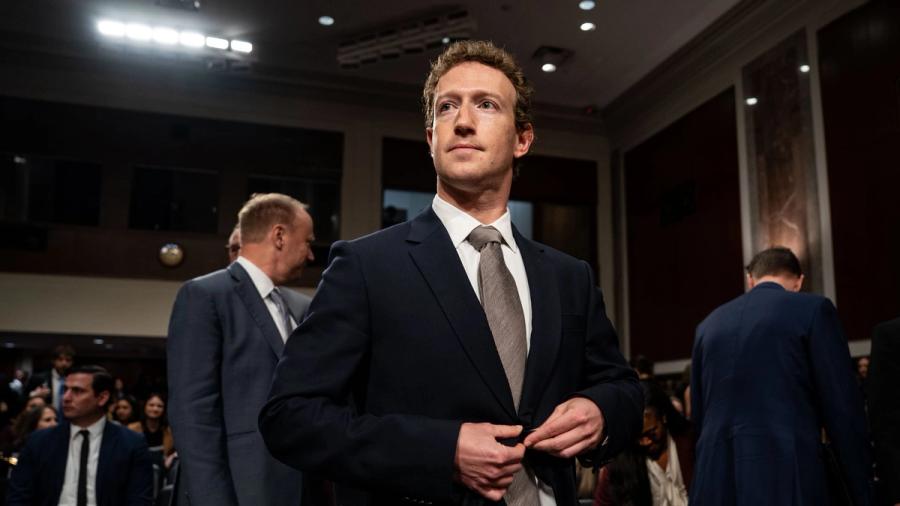
Mark's education: from Exeter to Harvard
According to official biographical accounts, Zuckerberg started at a regular school, Ardsley High School, before transferring to Phillips Exeter Academy, one of the most prestigious prep schools in the US. There he captained the fencing team and earned a diploma in classics, and for his senior project built an early music-recommendation program called Synapse — a precursor to what services like Pandora would later make routine.
In 2002 Zuckerberg enrolled at Harvard, where he double-majored in computer science and psychology. By his freshman year he already had a reputation as a strong developer, building CourseMatch, a program that helped students pick classes based on what other students had chosen. It was during his sophomore year, in the winter of 2004, that he launched TheFacebook — and by 2005 he'd dropped out entirely to focus on it.
Twelve years after leaving, in May 2017, Harvard awarded Zuckerberg an honorary Doctor of Laws degree and invited him to deliver the commencement address — making him the youngest principal speaker in the university's 366-year history. In his speech he joked, not without irony, that he never actually finished a course at Harvard, and he captioned a photo of himself holding the diploma alongside his parents: "Mom, I always told you I'd come back and get my degree."
What made him such a strong entrepreneur
One of the most-discussed factors behind Zuckerberg's success is the company's governance structure: thanks to a class of shares with outsized voting power, he retained majority control of Facebook and Meta throughout the company's history, even as his ownership stake got diluted through new funding rounds and the IPO. In practice, that meant he could make long-term, risky calls — buying Instagram when it had 13 employees, betting the company on mobile, spending billions on the metaverse — without answering to quarterly investor reactions the way most public-company CEOs have to.
Another recognizable trait is buying potential competitors at the earliest possible stage instead of competing with them for users for years. Instagram was bought when its team was just 13 people; WhatsApp was bought at the peak of its growth, when the messaging app was already outpacing Facebook's own products on engagement in some countries. Both deals looked expensive and risky to the market at the time, but they ended up among the most successful acquisitions in tech history.
A second quality is a willingness to change course sharply, even at real cost. Renaming the company to Meta in 2021 and betting on the metaverse cost tens of billions of dollars and years of market skepticism, but once it became clear generative AI was the more promising direction, the company restructured on the fly instead of clinging to its previous big idea. It's showing the same pattern in 2026, aggressively ramping up AI infrastructure spending despite analysts' questions about the payoff.
Let's look at Mark's biggest achievements
The milestones worth naming go beyond simply building the largest social network in history — it's also how many times the company has rebuilt itself around new products: turning Facebook from a college network into a platform for billions of users, a successful 2012 IPO, folding Instagram and WhatsApp into one ecosystem without losing their identity as separate brands, and, more recently, shifting toward the open-weight Llama family of language models, which Meta — unlike many rivals — releases publicly.
The scale of what that dorm-room idea grew into shows up clearly in the latest numbers: according to Meta, an average of 3.6 billion people used at least one of the company's apps — Facebook, Instagram, WhatsApp, or Messenger — every day in June 2026, while second-quarter 2026 revenue came in at $60.8 billion, up 28% year over year. For comparison, that many people didn't even have internet access when TheFacebook launched in 2004.
In 2026 the company raised its capital expenditure forecast for data centers and AI infrastructure to $125–145 billion for the year — one of the largest AI infrastructure bets among any tech giant. Zuckerberg calls the goal of that spending "personal superintelligence" and says the company plans to double its computing capacity to 7 gigawatts this year, then double it again after that.
Where he put his money
Beyond the acquisitions above — Instagram, WhatsApp, Oculus — one less successful experiment deserves its own mention: in 2019, Facebook announced Libra, a blockchain-based payments network built around a stablecoin pegged to a basket of fiat currencies. Regulators worldwide reacted with alarm, and the project was rebranded Diem in an attempt to shed its reputation — but that didn't save it either. In January 2022, the Diem Association announced it was shutting the project down and sold its intellectual property to Silvergate Bank for $182 million in cash and stock — a bank that itself ceased operations in 2023. For crypto watchers, it remains a telling example of how hard it was even for a company the size of Meta to launch its own digital currency.
Far bigger in dollar terms is the current bet on AI infrastructure. Beyond data center spending, the company is building its own MTIA chips for training and running Llama models, and hiring "superintelligence"-tier researchers at salaries that have themselves become an industry talking point. It's the same pattern — promises that outrun current financial results — that we covered in a piece on how the company is pitching a personal AI agent for every user even as its free cash flow has collapsed.
Family life and childhood
Mark Zuckerberg grew up in Dobbs Ferry, New York, the son of dentist Edward Zuckerberg and psychiatrist Karen Zuckerberg, who married in 1979. He has three younger sisters: Randi, who held marketing roles at Facebook at various points and later founded her own media company; Donna, a classicist with a PhD from Princeton; and Arielle, a tech investor. He met his future wife, Priscilla Chan, while they were both students at Harvard, and they married in 2012 right after Facebook's IPO. The couple has three daughters — Max (born 2015), August (2017), and Aurelia (2023) — whose names, by Zuckerberg's own account, nod to figures from ancient Rome. In 2015, announcing Max's birth, the couple pledged to give away 99% of their Facebook shares over their lifetimes — worth roughly $45 billion at the time — to the Chan Zuckerberg Initiative, a philanthropic effort structured as an LLC rather than a traditional foundation, which let it invest across a wider range of projects instead of sticking to grants alone.
What he's actually said about Facebook
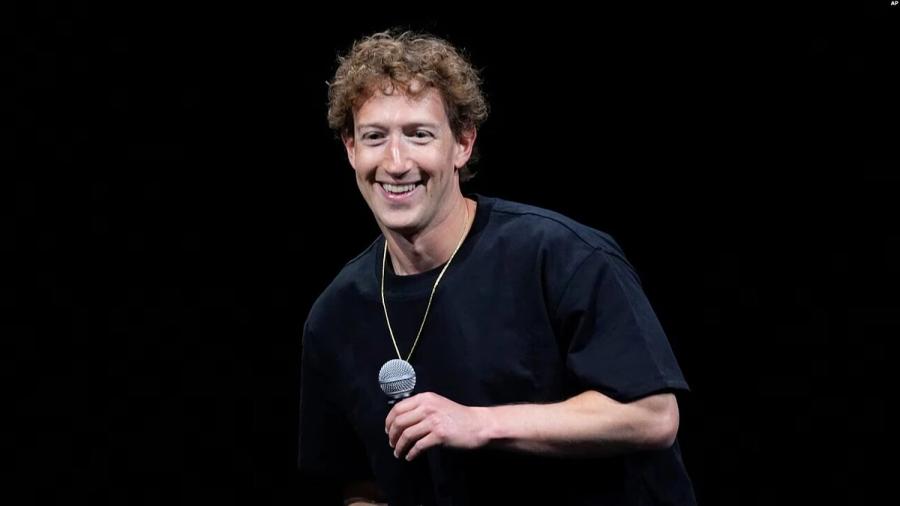
In a letter to prospective investors ahead of the 2012 IPO, Zuckerberg spelled out what he calls the company's philosophy:
“Facebook was not originally created to be a company. It was built to accomplish a social mission — to make the world more open and connected.”
— Mark Zuckerberg, letter to prospective investors ahead of Facebook's 2012 IPO
In the same letter he laid out a principle that later became a startup-world motto and drew as much criticism as admiration:
“We have a saying: 'Move fast and break things.' The idea is that if you never break anything, you're probably not moving fast enough.”
— Mark Zuckerberg, letter to prospective investors ahead of Facebook's 2012 IPO
Later, once the cost of that approach became too obvious and the platform too large to tolerate constant breakage, the company officially changed the phrase to "move fast with stable infra" — a rare case of a company publicly admitting its own slogan had outlived its usefulness.
More than twenty years have passed since that night in a dorm room, and Zuckerberg's company has been, at different points, a college toy, an advertising machine, the target of regulatory probes around the world, and a failed crypto issuer — and it's now turning into one of Silicon Valley's biggest bets on the future of artificial intelligence. Whether that bet gets the same luck that carried Facebook twenty years ago is a question even Zuckerberg himself can't answer yet.
This article is informational and based on official sources and public statements from the company and its founder.

Author
Maks RybalkoReviewer
For the past four to five years, I've been actively interested in the cryptocurrency market, using a variety of tools: trading bots, trading, and long-term investing. I share my personal observations in my articles.
Comments (0)
No comments yet — be the first!
Related articles
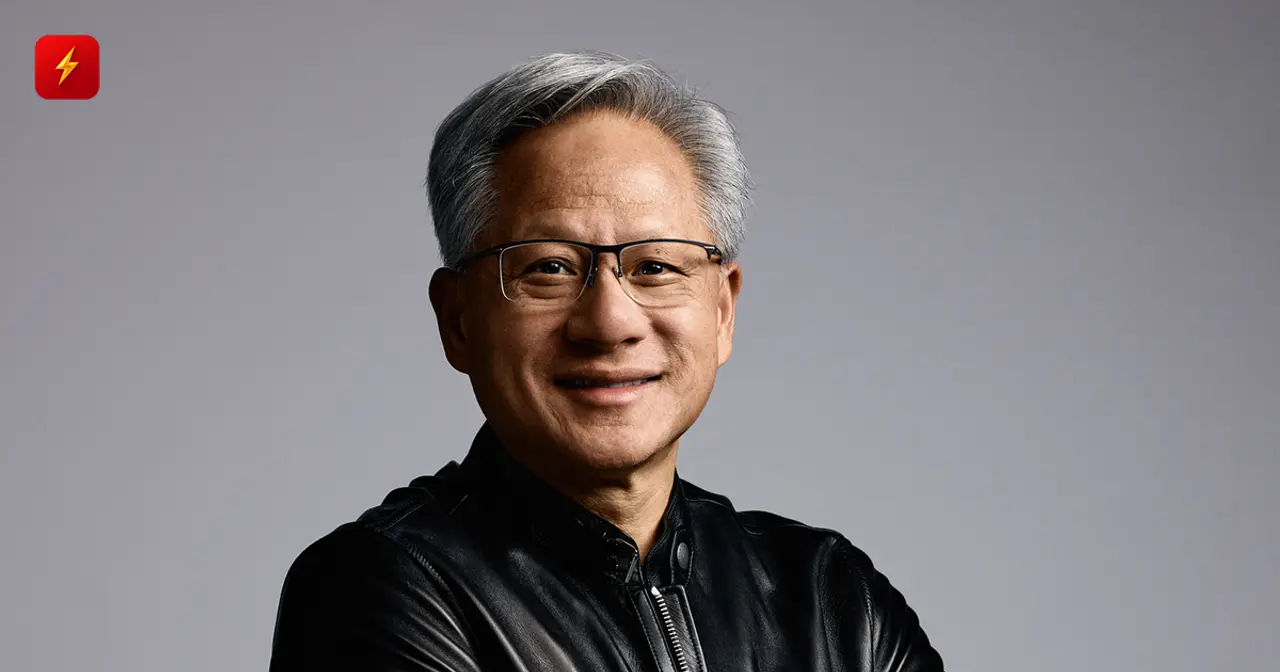
Jensen Huang: How a Kid From a Denny's Diner Built a Giant
For thirty years, Jensen Huang told employees Nvidia was "thirty days from going out of business" — now he runs a $4.7 trillion company. The founder's story, from a Denny's diner to his first-ever X post and $1 trillion in Blackwell and Rubin chip orders.
Sam Altman: The Billionaire who doesn't own a single share of OpenAI
Sam Altman doesn't own a single share of OpenAI, yet became a billionaire in its orbit. The story of a man who went from a teenager in St. Louis to a figure promising the world superintelligence — with five days of being fired in 2023, Worldcoin, and a very public personal life.

The AI you don't see is already running the world
While everyone argues about chatbots, a much bigger share of AI works quietly in the background: balancing power grids, speeding up drug discovery, watching crops from orbit, and moderating billions of posts a day.
Most read
Silicon Valley Workers Are Wearing Noise-Cancelling Masks to Dictate AI Prompts
213 views
Elon Musk Expands Access to X Money, the Payments Service Inside X
153 views
Strategy Didn't Buy Any Bitcoin Last Week — and Now Has a Plan to Sell It
45 views
Layer-2: How Blockchains Get Faster Without Touching the Base Chain
44 views
Silicon Valley's weird AI-dictation mask trend is the tip of a $22 billion voice AI boom
32 views
Crypto Cards That Never Take Your Keys
32 views
Crypto Market Drops 4-5% in a Day: What Volume and Traders Are Saying
31 views