
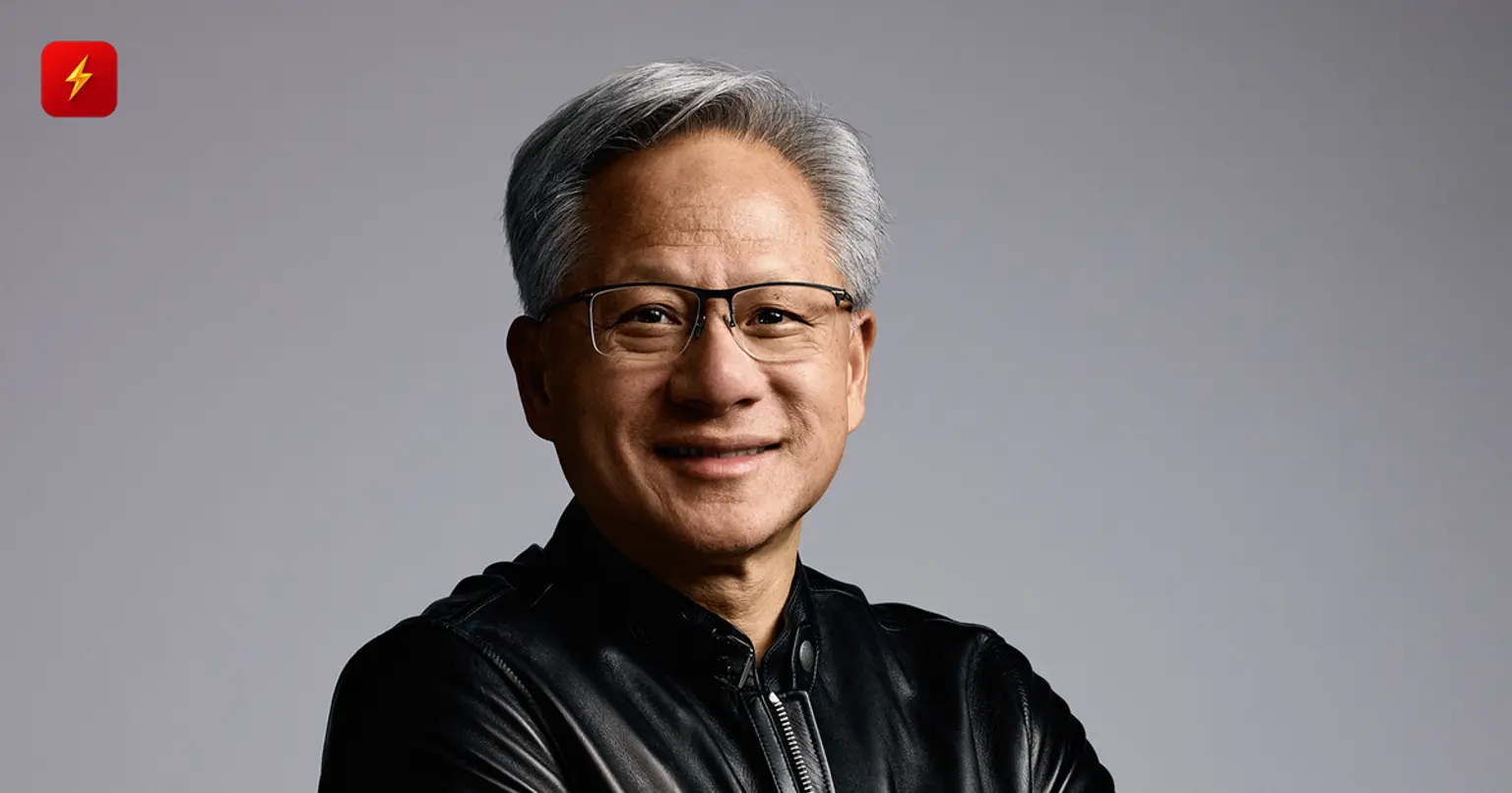
Jensen Huang: How a Kid From a Denny's Diner Built a Giant
When Jensen Huang finally joined X in 2026, that alone was news — not because of what he said, but because he'd never done it before. The founder of a $4.7 trillion company, the world's largest maker of AI chips, hadn't posted a single public tweet before July 2026. This is the story of a man who spent thirty years telling employees his company was "thirty days from going out of business" — and now runs the most valuable business on the planet.
The kid mistakenly sent to a reform school
Jensen Huang was born on February 22, 1963, in Taipei, Taiwan, to a chemical engineer and a schoolteacher. At five, the family moved to Thailand, where he spent several years at an international school in Bangkok — until 1973, when social unrest in Thailand led his family to send nine-year-old Jensen to relatives in the US.
A notable detail: a mix-up in the paperwork landed him not in the elite academy his parents had hoped for, but in the Oneida Baptist Institute — a reform school in Kentucky typically reserved for troubled teenagers. He was bullied there and lived in harsh conditions — which, in his own words, is exactly what taught him self-reliance and resilience. The family later reunited in Oregon, where Huang skipped two grades and graduated high school at 16 — while working from age 15 at a Denny's diner as a dishwasher, waiter, and busboy.
The engineer who coded at night
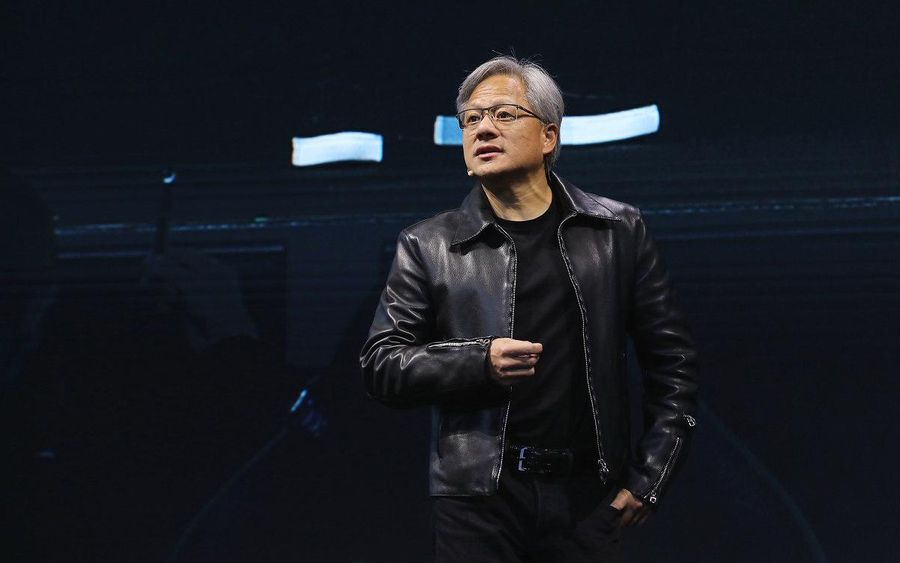
Huang earned a bachelor's degree in electrical engineering from Oregon State University with honors, and a master's from Stanford, attending night classes while working and raising two children. He designed microprocessors at AMD, then worked as a technical officer at LSI Logic, where he met engineers Chris Malachowsky and Curtis Priem. Together the three developed the GX graphics engine, which drove a notable revenue jump at Sun Microsystems — from $262 million in 1987 to $656 million in 1990.
Nvidia was born over breakfast at a diner
When Sun's business slowed, Huang, Malachowsky, and Priem quit to build chips for 3D graphics on personal computers. They planned the company at that same Denny's chain — Huang has said it was quieter than home and served cheap coffee. The company was officially incorporated on April 5, 1993, with $600 in starting capital — $200 from each of the three founders. The name was first NVision, then Nvidia, from the Latin invidia ("envy").
The early years nearly killed the company: Nvidia bet on quadrilateral primitives instead of the triangles competitors preferred, and came close to shutting down. A $5 million investment from Sega kept it alive. By the time the RIVA 128 chip shipped in August 1997, the company had one month of payroll left — which is when the unofficial phrase was born that Huang would repeat to staff for years.
“Our company is thirty days from going out of business”
— Jensen Huang, Nvidia co-founder and CEO
Thirty years later, nobody remembers the thirty days
Nvidia went public in 1999. But the real surge came on the AI boom: Huang's net worth grew from $3 billion in 2019 to $90 billion in May 2024, and topped $100 billion within a month. Nvidia's market cap hit $3 trillion in June 2024, and in October 2025 the company became the first in history to cross $5 trillion. Today, by Huang's own forecast, shares could well return to that mark — market cap currently sits around $4.77 trillion.
Blackwell, Rubin, and a trillion dollars in orders
In the first quarter of fiscal year 2027 (ended April 26, 2026), Nvidia's revenue grew 85% year over year to a record $81.6 billion — its fourteenth straight quarter of growth. At GTC 2026, Huang said combined orders for Blackwell chips and the next-generation Vera Rubin could reach $1 trillion through 2027. "Vera Rubin is going to be even more successful than Blackwell," he said, adding that the new architecture opens up an additional $200 billion market for Nvidia. The company plans to start shipping Rubin systems as early as the third quarter — meanwhile Nvidia keeps funding other companies' AI infrastructure too, including OpenAI's largest data center at $500 billion.
China, export controls, and 'nanoseconds'
One recurring headache is US policy on chip exports to China. In April 2025, the Trump administration banned H20 chip sales to China, costing Nvidia $4.5 billion in quarterly revenue. Trump later reversed course and allowed shipments of the more powerful H200 — on condition the US gets a 25% cut of sales. At GTC 2026, Huang said the company had already received orders from China and was "restarting manufacturing" for them. His stance is blunt: "China is nanoseconds behind the US" in chipmaking — and he calls the Chinese market "one of the world's largest AI markets and a springboard to AI leadership," pushing for looser export restrictions.
His first tweet ever
On July 24, 2026, Huang posted for the first time ever on X — and dedicated it not to Nvidia, but to an open letter defending open AI models, co-signed by roughly 25 organizations including Microsoft, Meta, Hugging Face, Andreessen Horowitz, Perplexity, IBM, and Palantir, Fortune reports, drawing a parallel to open-source software in the 1980s, which the industry nearly strangled with excessive restrictions.
“Open models strengthen safety and cybersecurity, accelerate innovation and diffusion, and enable sovereignty. The world needs both frontier closed models and frontier open models”
— Jensen Huang, first X post, July 24, 2026
Later, at a Y Combinator event, Huang explained why he finally posted then: "What I posted was too important to me, and too important to the industry and too important to the world. And so I overcame my shyness and put my first thing out on X." The post drew a wave of approving replies from industry leaders — from OpenAI's Sam Altman to Social Capital founder Chamath Palihapitiya.
So what do we know about his personal life?
Huang is married to Lori Mills — they met as lab partners at Oregon State University and married in 1985. The couple has two adult children, Spencer and Madison, both of whom now work at Nvidia. One odd fact: Huang is a first cousin of Lisa Su, AMD's CEO — Nvidia's direct rival — and he only learned of the connection after Su took the top job at AMD.
At work, Huang deliberately has no fixed office — he roams the building and settles into whatever conference room is free, doesn't wear a watch ("now is the most important time," he explains), and personally keeps around 60 direct reports, demanding full self-sufficiency from each. The family's Jen-Hsun & Lori Huang Foundation, founded in 2007 with $330 million in Nvidia shares, had grown past $12 billion by late 2025 — one of the largest private foundations in the US; it plans to give out $369 million in grants in 2025, even as Nvidia itself keeps investing in other countries' AI infrastructure.
Putting it all together
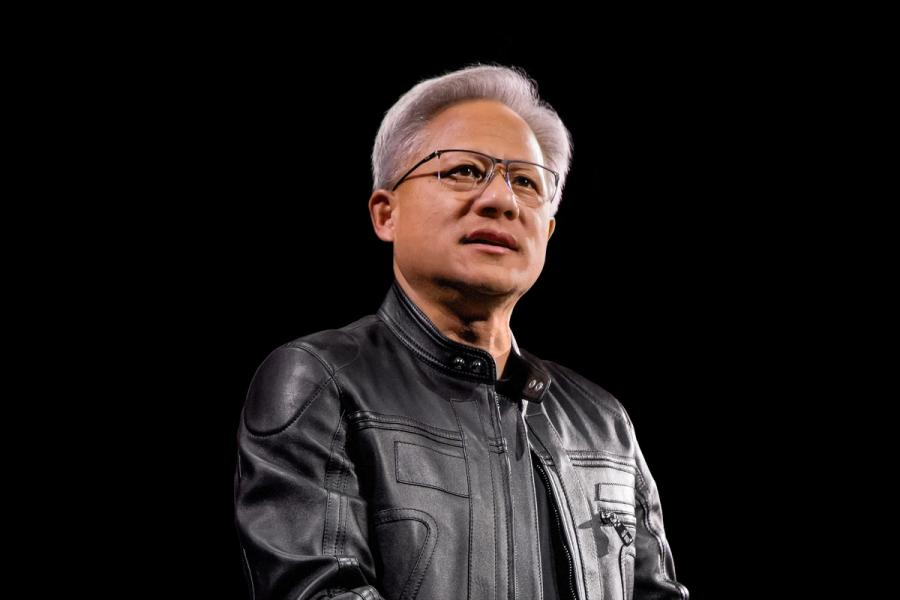
Today's Huang is anything but a story of linear success. It's thirty-plus years lived under the motto "we're thirty days from bankruptcy," which suddenly turned into the largest market cap in corporate history. His own admission to journalists: if he could go back in time, he wouldn't start the company again — there was too much pain and suffering along the way. And yet, thirty-three years after that breakfast at Denny's, this is the man — who never wrote a single line on social media before July 2026 — whose words are now quoted simultaneously by the heads of OpenAI, Meta, and Microsoft.
My own two cents: I remember a time when Nvidia was always in the news simply because it made flawless graphics cards everyone wanted to buy. Now the company has become a giant of the entire industry — probably down to a mix of strong leadership, catching the AI wave at the right time, and pretty good marketing. What do you think?
Nothing here should be taken as financial advice — just information to consider.

Author
Maks RybalkoReviewer
For the past four to five years, I've been actively interested in the cryptocurrency market, using a variety of tools: trading bots, trading, and long-term investing. I share my personal observations in my articles.
Comments (0)
No comments yet — be the first!
Related articles
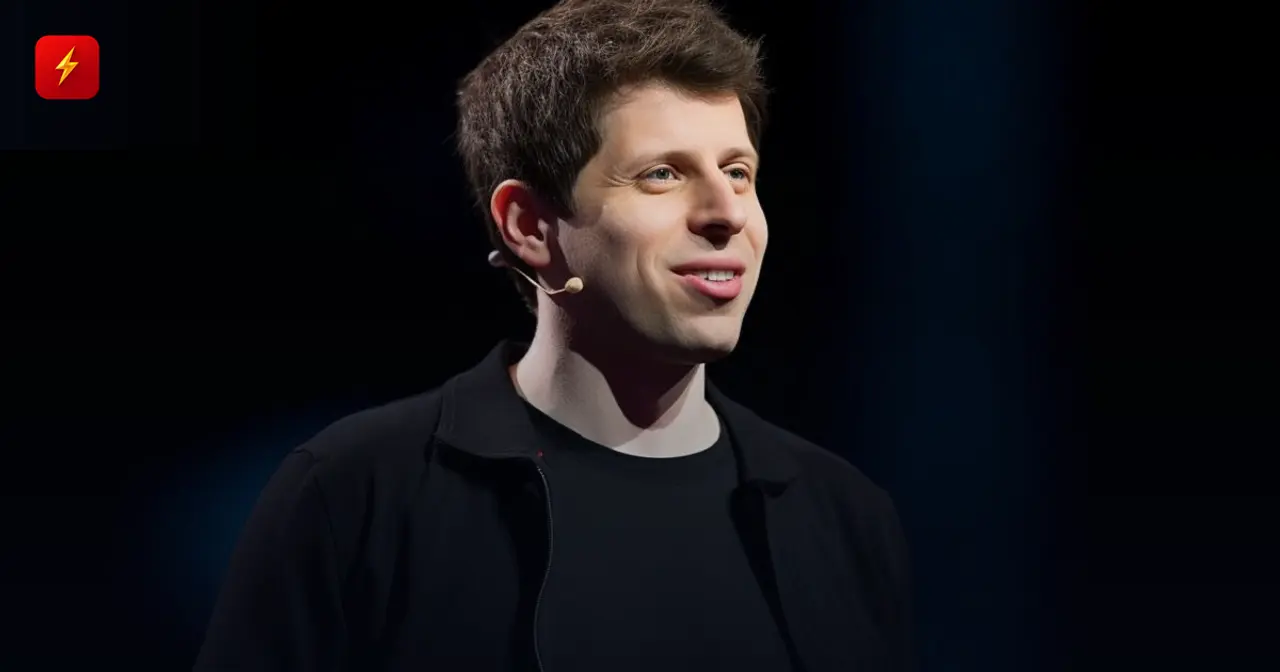
Sam Altman: The Billionaire who doesn't own a single share of OpenAI
Sam Altman doesn't own a single share of OpenAI, yet became a billionaire in its orbit. The story of a man who went from a teenager in St. Louis to a figure promising the world superintelligence — with five days of being fired in 2023, Worldcoin, and a very public personal life.

The AI you don't see is already running the world
While everyone argues about chatbots, a much bigger share of AI works quietly in the background: balancing power grids, speeding up drug discovery, watching crops from orbit, and moderating billions of posts a day.
Chips as Targets: How the Iran-US War Is Hitting the Crypto Market and the AI Cloud at Once
The Iran-US war is now playing out on three fronts at once: the crypto market is reacting to it differently than before, AWS and Oracle data centers have taken real hits, and the Gulf's bet on AI infrastructure is measured in trillions of dollars.
Most read
Silicon Valley Workers Are Wearing Noise-Cancelling Masks to Dictate AI Prompts
210 views
Elon Musk Expands Access to X Money, the Payments Service Inside X
153 views
Strategy Didn't Buy Any Bitcoin Last Week — and Now Has a Plan to Sell It
45 views
Layer-2: How Blockchains Get Faster Without Touching the Base Chain
44 views
Silicon Valley's weird AI-dictation mask trend is the tip of a $22 billion voice AI boom
32 views
Crypto Cards That Never Take Your Keys
32 views
Crypto Market Drops 4-5% in a Day: What Volume and Traders Are Saying
31 views