
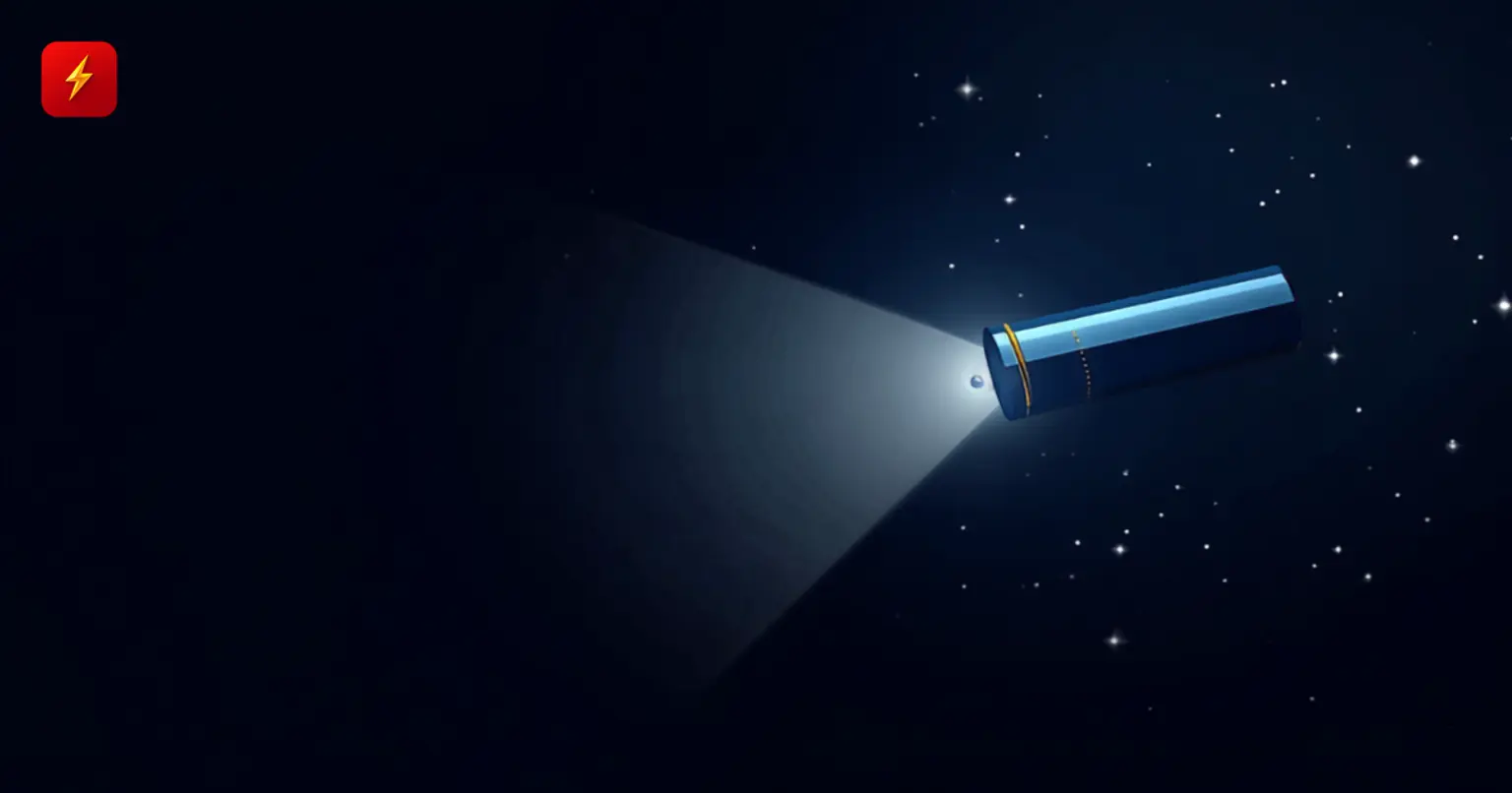
NASA's new dark energy space telescope can also detect killer asteroids
In late August 2026, NASA is set to launch the Nancy Grace Roman Space Telescope from Cape Canaveral, Florida, on a SpaceX Falcon Heavy rocket. Its primary job is to help scientists understand dark matter, which holds galaxies together, and dark energy, which drives the expansion of the universe. But the telescope has a second, less obvious role: spotting asteroids that could pose a threat to Earth.
Roman's field of view is roughly 100 times wider than Hubble's, and its infrared 300-megapixel camera can pick out asteroids as small as 60 feet across — comparable to the object that exploded over Chelyabinsk in 2013. According to Bryan Holler of the Space Telescope Science Institute, Roman's infrared data can help estimate an asteroid's composition — stony, carbon-rich, or metallic — which in turn points to its density and mass, information that's critical for estimating potential impact damage or the effort needed to nudge a dangerous asteroid off its orbit.
Roman can provide infrared observations of more asteroids than JWST could hope to observe in a reasonable amount of observing time
— Bryan Holler, Space Telescope Science Institute
- Launch: late August 2026, on a SpaceX Falcon Heavy from Cape Canaveral
- Roman's field of view is roughly 100 times larger than Hubble's
- The telescope can resolve asteroids as small as 60 feet — Chelyabinsk-event scale
In September 2026, a team of planetary scientists and astronomers will present a detailed proposal for using Roman in planetary defense at the Europlanet Science Congress in The Hague. NASA's Rick Cosentino said that demonstrating Roman's concrete value for planetary defense is also a way to raise the mission's visibility with lawmakers and taxpayers. Roman is meant to join a broader asteroid-tracking network alongside the already-operational Vera Rubin Observatory, expected to discover around 89,000 near-Earth asteroids over its ten-year sky survey, and the upcoming NEO Surveyor mission, aimed at finding 90% of "city-killer" asteroids 460 feet and larger.
For readers who follow SpaceX through a markets lens, this launch has a financial angle too: the rocket carrying Roman comes from SpaceX — the same company whose five-layer business model we examined in our piece on why SpaceX could become a $10 trillion company, and whose IPO we separately covered in the context of problems facing tokenized stocks in crypto. Carrying a science mission of this scale on a Falcon Heavy is one more data point in the picture of a company that's grown well beyond purely commercial launches.
After roughly 90 days of commissioning, Roman is expected to begin full science operations in early 2027 — at which point it'll become clear whether it can live up to its dual role as both a cosmology instrument and part of Earth's asteroid-defense system.
Nothing here should be taken as financial advice — just information to consider.

Comments (0)
No comments yet — be the first!
Related news
BingX unveils $2M multi-asset trading campaign around top market trends
Kraken launches The Bullion Rush: a $20,000 gold and silver trading contest

Kraken launches 15th Anniversary Sweepstakes: 15 winners, 15 ETH each
Most read
Silicon Valley Workers Are Wearing Noise-Cancelling Masks to Dictate AI Prompts
219 views
Elon Musk Expands Access to X Money, the Payments Service Inside X
153 views
Strategy Didn't Buy Any Bitcoin Last Week — and Now Has a Plan to Sell It
46 views
Layer-2: How Blockchains Get Faster Without Touching the Base Chain
44 views
Silicon Valley's weird AI-dictation mask trend is the tip of a $22 billion voice AI boom
33 views
Crypto Cards That Never Take Your Keys
32 views
Crypto Market Drops 4-5% in a Day: What Volume and Traders Are Saying
31 views